
Every guide that answers what a 3D character model costs gives you a clean range and an unclean truth: the range is for the model, and a game producer usually needs a good deal more than the model. They ship a character that’s rigged, animated, optimized, and standing in an engine — and those are the line items the headline number quietly excludes. We build characters for games and real-time projects, so below is the market data with sources and dates, followed by the arithmetic the ranking cost guides skip: what it takes to get from a price band to a playable character.
3D character model cost: the 2026 market bands
Across the studios that publish prices, the tiers agree more than they differ. The bucket ranges below are our synthesis across sources — each bullet cites the individual bands they’re built from:
- Simple / low-poly characters: $300–$5,000 — Juego Studios’ guide (Nov 2025) starts at $300–$800 for low-poly stylized; RocketBrush puts its basic tier at $1,000–$5,000.
- Stylized character model: $3,000–$5,000 — Pixune (updated August 2026) and RetroStyle Games agree almost exactly here ($3,000–$5,000 bands both).
- Realistic / photoreal: commonly $4,000–$10,000 in the published tables, extending to $20,000+ — Pixune’s photoreal band tops out at $10,000 with no open end, while RocketBrush’s photorealistic tier runs $4,000–$20,000+ and its separate ‘stylized / cinematic AAA’ tier spans $2,500–$20,000 — note that one is filed under stylization, not realism, which is easy to misread as a realism band.
- Hero / AAA: published upper ends start around $8,000 and run past $20,000, depending mostly on hair, cloth and rigging — though not every headline table reaches that high — Juego’s top band runs to $10,000+, leaving its ceiling open, while Pixune’s photoreal band closes at $10,000. RetroStyle quotes 25+ working days at its AAA tier.
Two dating caveats the SERP won’t give you. RetroStyle’s much-cited guide is a February 2023 post that still ranks. And VSQUAD and RocketBrush publish essentially identical tier and hourly-rate tables, which makes their agreement poor evidence of independent corroboration — we count them as one signal, not two. RocketBrush stamps its table ‘prices updated August 2025’; VSQUAD’s carries an August 2026 date on the same numbers. That is why every figure here carries its own source and date, and why we link them.
The line items the headline price leaves out
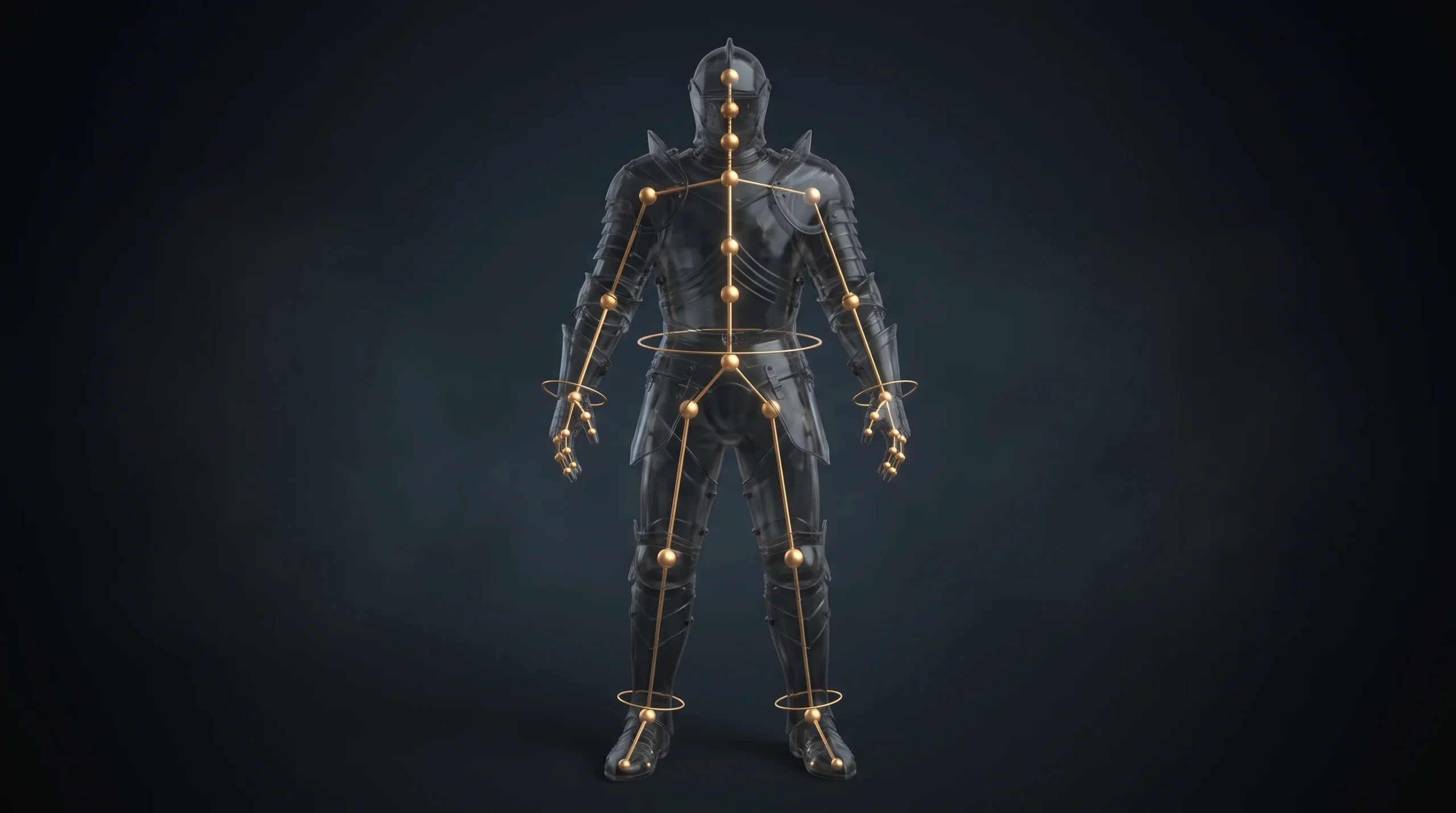
The pattern across sources is remarkably consistent: rigging is not included unless you ask. RetroStyle’s guide states rigging has to be requested separately, Kevuru’s (May 2026, and drawing on Upwork marketplace data rather than studio rates) that it isn’t assumed by default, Pixune prices rigging separately at $500–$2,500, and VSQUAD adds $500–$1,500 for a rig with a basic animation set on a character with a low polycount and standard textures. Around the rig, the rest of the invoice assembles: concept art at $200–$1,500 (VSQUAD, Pixune) if you don’t bring approved designs, animation billed separately again — Juego prices basic animation from $500 per minute — LODs and engine optimization as separate items, and rush premiums of 25–50% (VSQUAD, RocketBrush). The headline price buys a statue. The budget buys a character.
From model price toward playable: a worked example
Assemble a stylized hero from the published bands and watch the number move: a $3,000 model at the bottom of the $3,000–$5,000 band Pixune and RetroStyle share, plus $500–$1,500 for rig and basic animations (VSQUAD’s own add-on figure), already puts you at $3,500–$4,500 — and that is before concept art, any custom animation beyond the basics, LOD production or engine-specific integration, none of which we can price from the published tables. On the model’s sticker price alone that is a 17–50% uplift, with several real line items still outside the number. That multiplier — not the tier table — is the number to budget with, and it’s the difference between the quotes that surprise you and the ones that don’t. Then multiply honestly: eight characters at that subtotal are already a five-figure line before a single environment exists, which is exactly why producers sequence hero characters first and background cast at lighter tiers — the mix, not the tier, is where character budgets are actually won. What “engine-ready” should contractually include is its own topic (our how studio character pipelines actually work walks the production side of it).
Why the published ranges disagree
Juego starts low-poly at $300 and VSQUAD’s floor is $1,000, while marketplace gig listings advertise starting prices well below either — we haven’t put a number on that tier because the listings we could find aren’t comparable enough to average honestly. All are real prices for genuinely different products. The marketplace floor buys a mesh, usually unrigged, with whatever topology the artist favors — fine for a static render, expensive the moment it has to deform (our low-poly modeling page covers why topology is where corners actually get cut). The supplier label alone tells you little: a senior freelancer may hand over a complete engine-ready character, and a studio quote may still exclude rigging or animation. What you are buying at the studio band is meant to be roster scale — the tenth character matching the first, on schedule, with source files — so compare the deliverables list, not the job title; that’s the tier our character design services operate in. Which one you need depends entirely on whether you’re buying one character or a cast.
Hourly framing tells the same story from the other side: published 2026 guides put junior freelancers at $15–$30 an hour, seniors at $50–$150+, and studios at $50–$200+ (VSQUAD, RocketBrush), with the regional split running roughly $15–$35 in Eastern Europe against $35–$90 for US freelancers (Kevuru, May 2026, citing marketplace data). An hourly rate only becomes a price when someone commits to the hours — which is why fixed, line-itemed quotes beat rate cards for anything you need to budget in advance.
Where AI fits in 2026
AI mesh generators have pushed the bottom of this market toward zero for static base meshes, and for concept exploration they’re genuinely useful. What has changed faster than most guides admit is rigging: Meshy’s own documentation now describes automatic skeleton assignment for humanoid and quadruped models, Mixamo-compatible animation, and rigged FBX export for Unity and Unreal. So the dividing line is no longer whether the character moves. It is whether the result clears your acceptance standard — and the vendor’s own caveats mark that line better than we could: it wants “clean topology” and advises “Remesh first, then Rig for best results”, it sends complex custom skeletons and facial rigs back to a DCC tool, and it warns that abnormal proportions produce “severe limb deformation”. Standard bipeds increasingly automate. Hero characters, unusual anatomy, and anything needing facial animation or a custom rig still come back to a technical artist.