
Game-ready 3D assets are sold with the vaguest promise in outsourcing: “optimized.” Optimized topology, optimized textures, optimized for your engine — and almost never a number, a convention, or an acceptance test in sight. We build props, characters, and environment assets for game and real-time projects, and this page does the thing we wish more vendors did: it states what we deliver, defines what game-ready means in our contracts — measurably — and puts the market’s published prices next to it so you can budget like an adult.

What we deliver
- Props and hard-surface assets — from set dressing to hero pieces, built to the polygon and texture budget your platform actually needs, at whatever point on the stylized-to-photoreal spectrum your art direction sits.
- Characters and creatures — sculpt-first where the design demands it (how we sculpt characters in ZBrush), retopologized and delivered rig-ready; this sits on the same foundation as our character design work.
- Environment assets and modular kits — trim-sheet and modular workflows so level designers assemble instead of requesting one-offs; kits ship with snapping-tested pivots and a demo assembly scene so the grammar of the kit is obvious in five minutes.
- Real-time crossover assets — the same discipline aimed at web viewers, AR, and configurators; low-poly modeling is the technique layer under all of it.
Targets stay current — Unreal Engine 5.8 shipped in June 2026, Unity 6.5 the same month, and Unity 6.3 is the current LTS, supported into 2027. Unity 6.2, barely a year old, is already out of support — which is the whole argument for asking any vendor which exact version they validate against rather than accepting a generic “Unreal/Unity ready” label. Delivery formats follow the target: FBX with clean hierarchies for engine pipelines, glTF/GLB where the destination is web or AR, source files alongside either way.
What “game-ready 3D assets” means in our contracts
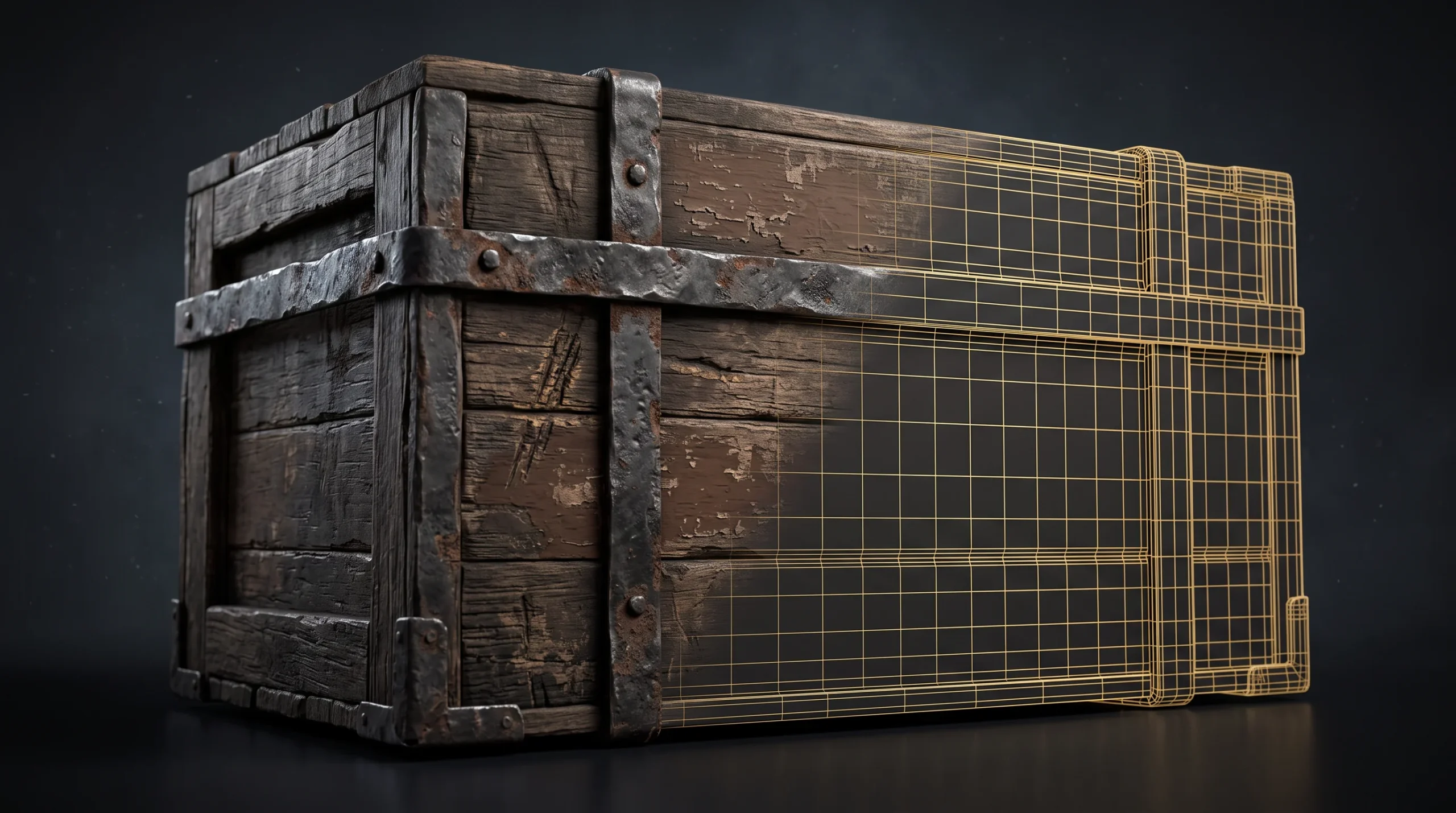
An asset isn’t game-ready because it looks finished in a portfolio. It’s game-ready when your engine says so. Here is the acceptance list, in writing:
- Engine conventions: naming per your project standard — for Unreal, Epic’s documented prefix conventions (SM_ static meshes, SK_ skeletal, MI_ material instances).
- Correct scale and pivots: built to engine units (centimeters in Unreal, meters in Unity), pivots placed for how the asset is actually used.
- Texel density on target: consistent density agreed up front and checked against your project’s asset standard rather than whatever resolution happened to be used while texturing. Where a project has no standard yet, we set one during scoping from asset importance, camera distance, platform and memory budget — not whatever the texture happened to be.
- PBR texture sets in metal/rough at power-of-two sizes, packed the way your pipeline expects.
- LOD chain or Nanite-suitable source — declared per asset, not discovered at integration.
- Collision meshes where gameplay touches the asset.
- Import-validated: every delivery is opened in the engine version you name before it ships. Not “should work.” Opened.
- Source files included — the editable sculpt, scene and texture project files we create are delivered with the asset. Where a piece depends on licensed third-party brushes, scans or base meshes whose licences cannot travel with it, that is named in the scope rather than discovered at handoff.
“Optimized topology” is what vendors write when they haven’t defined what passes. The list above is what passing means here — and if your studio has its own technical bible, we build to yours instead.
How an asset order actually runs
Outsourcing horror stories are almost always process stories, so here is ours, gate by gate. First, the spec: budgets, texel density, naming, delivery formats and exactly which source files come with the work, all agreed in writing — built from your technical bible if you have one, from the checklist above if you don’t. Second, blockouts: proxy meshes at correct scale and silhouette, cheap to approve and cheap to redirect, because redirection at blockout costs an afternoon and redirection after texturing costs a week. Third, production: sculpt or model, retopology, UVs, bakes, texturing — with WIP visibility, not a three-week silence. Fourth, the validation pass: the asset goes into the named engine version, gets checked against the acceptance list, and only then ships with its source files. Feedback has one home per gate; consolidated notes at each approval point beat a running stream of screenshots from three reviewers, and your schedule will feel the difference more than ours does.
Style consistency at roster scale
The quiet fear behind every asset outsourcing decision isn’t the first delivery — it’s the twentieth. One prop matching a reference is craft; a hundred-asset library where piece ninety-eight sits beside piece three without a visible seam is process. That’s what a style bible exists for: agreed material conventions, wear logic, silhouette language, and per-asset QA against the bible rather than against the artist’s memory. A style bible beats a mood board the way a contract beats a handshake. If you don’t have one, the first few assets of an engagement are where we build it with you — cheap insurance against the drift that turns libraries into flea markets.
The AI-asset question, answered before you ask
Context worth having in 2026: roughly one in five games released on Steam during 2025 disclosed generative-AI use in some form. Separately, the same Tom’s Hardware analysis counted 7,818 AI-disclosing titles across Steam’s entire library — about 7% of it, up 681% on the previous count — with around 60% of disclosures mentioning visual asset generation. Player sentiment is more mixed than the discourse suggests: GameDiscoverCo’s survey of about 3,800 Steam users found 31% negative, 43% completely fine, and 26% neutral, with roughly 8% saying they would not buy a game with AI content at all. Whatever position you take on the tools, commissioning human-authored 3D assets means those assets raise no disclosure question of their own. It does not clear the whole game: Steam’s content survey asks about any content shipping to players that was made with generative AI — artwork, sound, narrative, localisation — so a title can still need a disclosure for something other than its models. For most buyers this is one production and store-page risk removed rather than a reason to choose a vendor.
What the market charges
Published rates from studios that post them, so you can calibrate any quote — including ours: Kevuru prices by complexity rather than asset class — $100–$600 low-poly for mobile and stylized work, $600–$2,500 mid-detail, $2,500–$6,000 high-detail, $6,000–$20,000+ for AAA and cinematic assets. Juego Studio splits characters the same way: $300–$800 low-poly stylized, $1,000–$2,500 mid-quality, $3,000–$10,000+ photoreal. VSQUAD publishes hourly rates by region — Asia $15–$35, Eastern Europe $25–$35, US $40–$60 — and turnarounds of 4–10 days for props and 2–4 weeks for a mid-poly character. All three are studios selling this work, so read them as market signals rather than neutral survey data. The spread is legitimate — asset class, detail tier, and how much of the acceptance list above is actually included decide where a quote lands. When one quote looks impossibly cheap, check whether import validation, LODs, collision and editable source files are actually in it before comparing it with anything else.
A worked example of how quotes are structured, using only the published bands above: a twenty-prop environment pack at mid-complexity sits inside Kevuru’s $600–$2,500 mid-detail band per asset — but the real spread inside that range is driven by shared materials. Ten props on two trim sheets price differently than twenty props with unique texture sets, which is why the SKU-list conversation happens before the quote, not after. The same logic scales to characters: the model is one line, the rig another, the animation set a third — and a quote that shows you those lines is a quote you can actually compare.
Who this suits
Producers at indie and mid-size studios who need production-grade assets without becoming a small account at a 200-artist factory. Brands building game-adjacent experiences — configurators, virtual showrooms, AR — who need game-engine discipline applied to commercial work; the crossover runs both directions, since real-time commerce assets live and die by the same budgets game assets do. Teams mid-project who inherited assets that fail exactly the checklist above and need triage, fast. And art directors who want a partner that reads a technical bible instead of negotiating with it. If the engagement is a single hero character or a full environment kit, the process is the same size; only the schedule changes.