
Most “Landscape Architect 3D” searches lead to either software tutorials or licensed landscape architecture firms. We are neither. Art Land Design is a 3D visualization studio — the people developers, architects, and homeowners hire when a landscape or exterior project needs to be seen before it’s built. If you have a concept and need it rendered, animated, or walked through in 3D, that’s the work we do.
What we don’t do: stamp landscape engineering drawings or take engineer-of-record responsibility. We collaborate with licensed landscape architects rather than replace them. Worth saying upfront because the phrase “landscape architect 3D” gets used both ways.
What “Landscape Architect 3D” Usually Means In Practice
In our inbox, the query almost always boils down to one of three things:
- A developer needs photoreal exterior renders of a residential or mixed-use site — the landscape design has been sketched by an architect or landscape consultant, and now somebody needs to turn it into marketing imagery.
- A homeowner or builder has a backyard, pool area, or outdoor-living redesign on the table and wants to see the concept before signing off on the budget.
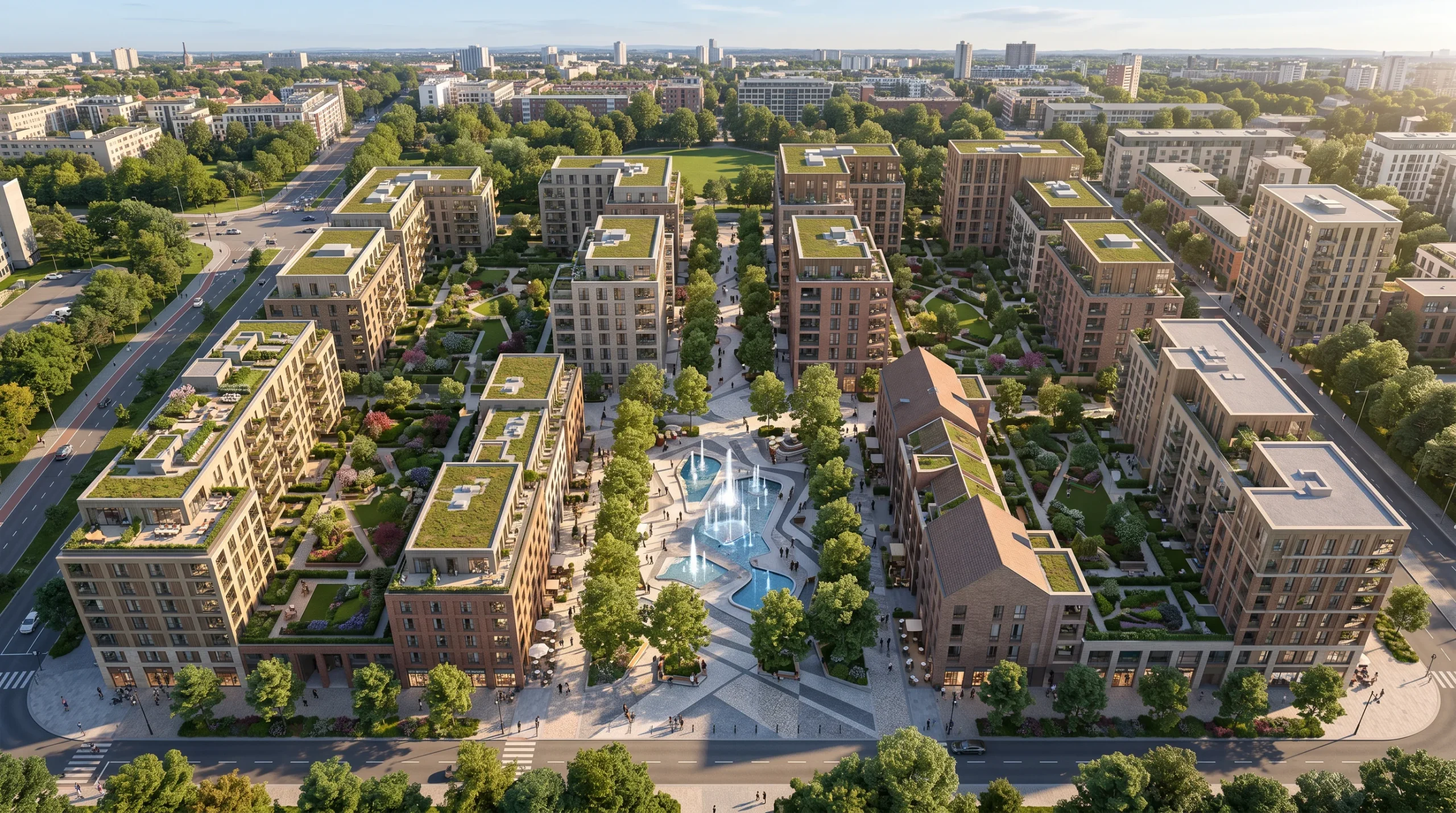
- An architecture firm needs a fly-through or walkthrough animation of a masterplan that includes substantial site work — paths, water features, planting beds, terraces.
All three are visualization problems. None of them require us to be licensed landscape architects, and pretending otherwise would be misleading.
The Honest Scope: Concept Design + 3D Visualization
For exterior and landscape work, here’s what we actually produce:
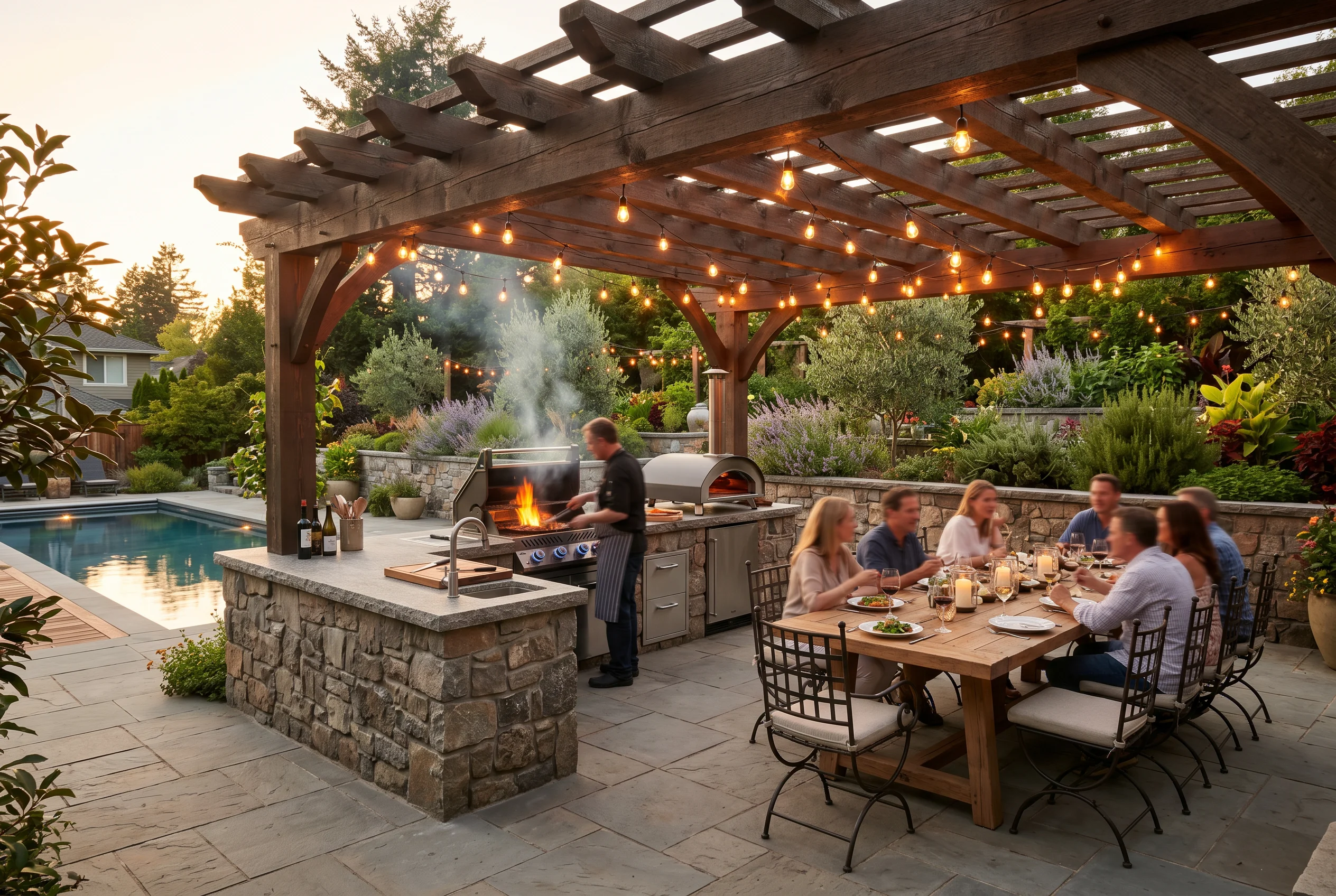
- Concept plans and layout studies for backyards, pool areas, outdoor kitchens, entertainment zones, and front-yard redesigns.
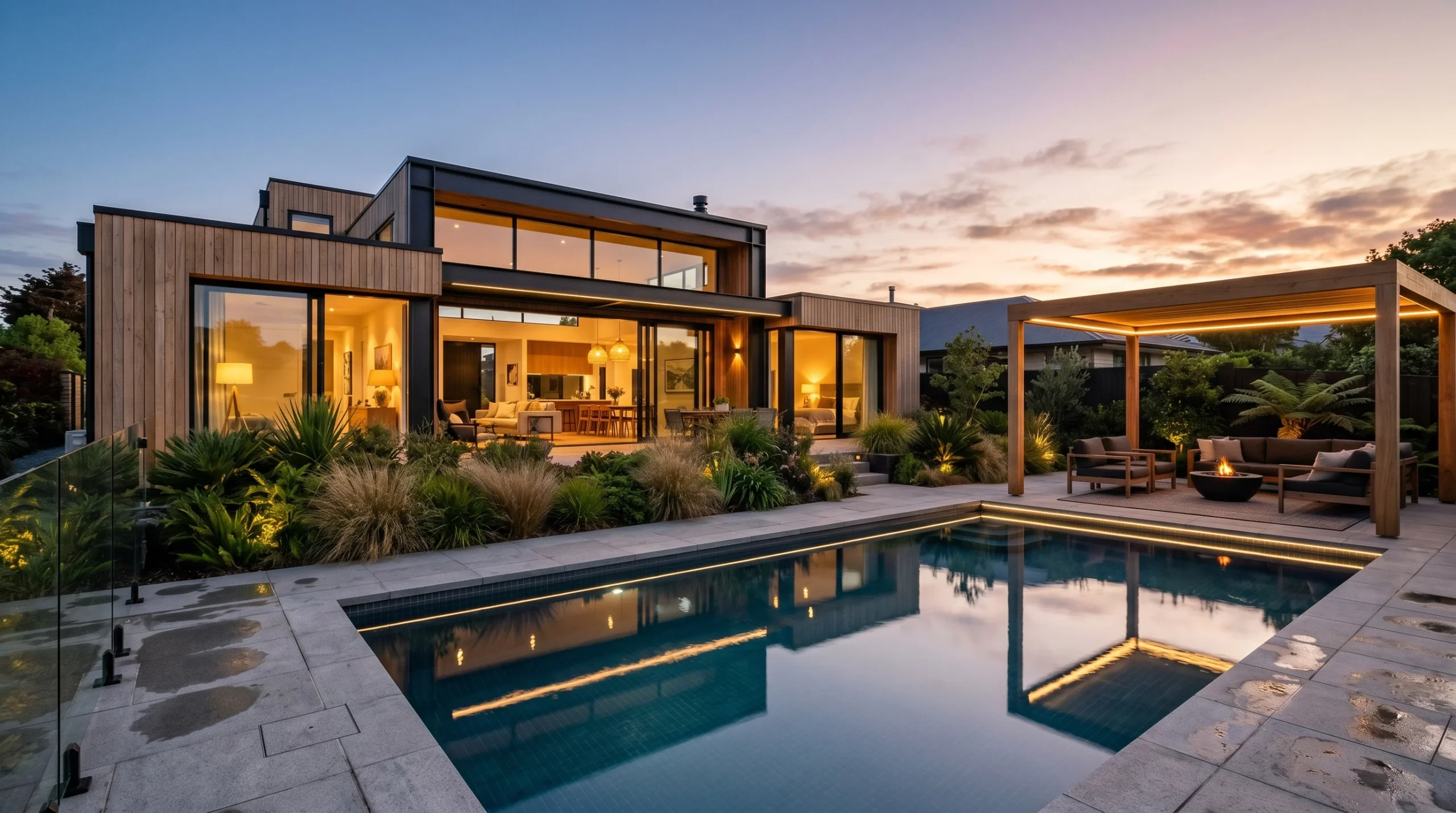
- Photoreal exterior renderings showing the property in context — daylight, dusk, with planting, hardscape, lighting, water.
- Animated walkthroughs and flythroughs for masterplans and large-site projects where stills aren’t enough.
- 360° panoramas and virtual tours when a client needs prospective buyers to “stand” inside the future garden or terrace.
If the project needs stamped engineering documents, drainage calculations, or formal landscape architecture credentials, that work goes to a licensed professional. Sometimes we collaborate with one; often the client already has one. Our piece is the 3D — and we stay in our lane.
Why The 3D Stage Is Where Landscape Projects Quietly Get Decided
Most landscape projects look fine on paper. Plans, elevations, mood boards — they all read well in a meeting. Then construction starts and somebody asks why the pergola feels cramped against the rear elevation, or why the pool deck reads as a parking lot from the upstairs balcony.
Half the value of a render isn’t selling the design. It’s catching the things nobody noticed when the project lived on a flat sheet. We’ve watched clients change pool orientation, swap paving materials, and rethink planting strategy on the basis of a single dusk render. That kind of correction is cheap before construction and brutally expensive after.
For developers running marketing on an unbuilt property, the math is different but the principle holds: a buyer scrolling a listing will not decode a site plan. They will, however, look at a rendered evening shot of the rear garden and feel something. Renderings drive real-estate decisions in a way drawings rarely do.
When Animation Or A 360 Tour Earns Its Keep
Not every landscape project needs animation. A single backyard redesign for a private homeowner — usually two or three stills are plenty. But there are projects where stills run out of room:
- Masterplans and multi-unit developments where the landscape is the connective tissue between buildings. A walkthrough lets the viewer feel the journey, not just inspect a frame.
- Hospitality and resort properties where the grounds are most of the product. Pool sequences, garden paths, terrace views at sunset — these need motion.
- Sales centers for off-plan developments, where a 360 tour stationed at a kiosk does the work a built model home used to do.
If you’re weighing whether motion is worth the spend on a specific project, our notes on when animation outperforms stills may help. Short version: if the design is about journey, sequence, or atmosphere over time, animate it. If it’s about a single hero view, render it.
What We Need From You To Start An Exterior Project
The smoother projects start with these in hand:
- Site plan or survey (PDF, DWG, or even a clear sketch with dimensions).
- Architectural drawings of any buildings on the site — at minimum a floor plan and elevations.
- Reference imagery for the look and mood you’re after. Pinterest boards work. So do screenshots of competitor properties.
- A material and planting palette if it’s been decided; if not, we’ll propose one.
- Camera intent — what views matter most, what the imagery will ultimately be used for.
If you have a licensed landscape architect on the project, looping them in early prevents the back-and-forth where they sketch, we render, they revise, we re-render. Our pipeline runs faster when the design intent is settled before the cameras get locked.
Software, Briefly
For exterior work, the core stack is 3ds Max for modeling and Corona Renderer for the final imagery. Revit comes in when the project is part of a broader BIM workflow. For animation we add After Effects and Premiere Pro on the back end. We use Three.js and WebGL when a project calls for a browser-based interactive tour rather than baked video. None of that tooling decides whether a render works — it’s the camera angle, the time of day, and the planting that do. The software is just what gets us there.
How To Brief Us If You’re Coming In Cold
You don’t need a finished design to start a conversation. We’ve worked on landscape projects where the only inputs were a survey, a site photo, and a single sentence (“client wants a Mediterranean feel, pool somewhere, outdoor kitchen for eight”). We’ve also worked on projects where everything was locked and we just needed to execute. Both ends of that spectrum are fine.
What helps most is knowing what the final imagery is for. A render destined for a planning meeting needs different treatment than one going on a listing. A walkthrough for an investor pitch is paced differently than one for a sales kiosk. Agencies working with developer clients often have the clearest brief on this — they know what kind of imagery actually moves a sale.