
A still render shows the room. A walkthrough lets the viewer be in it. That gap — between looking at a photo and feeling like you’re standing somewhere — is what 3D walkthrough services actually sell. We build them for developers, hospitality operators, real-estate agencies, and product showrooms that need a buyer to make a decision before the space is finished, before the trip is booked, or before the catalog ships.
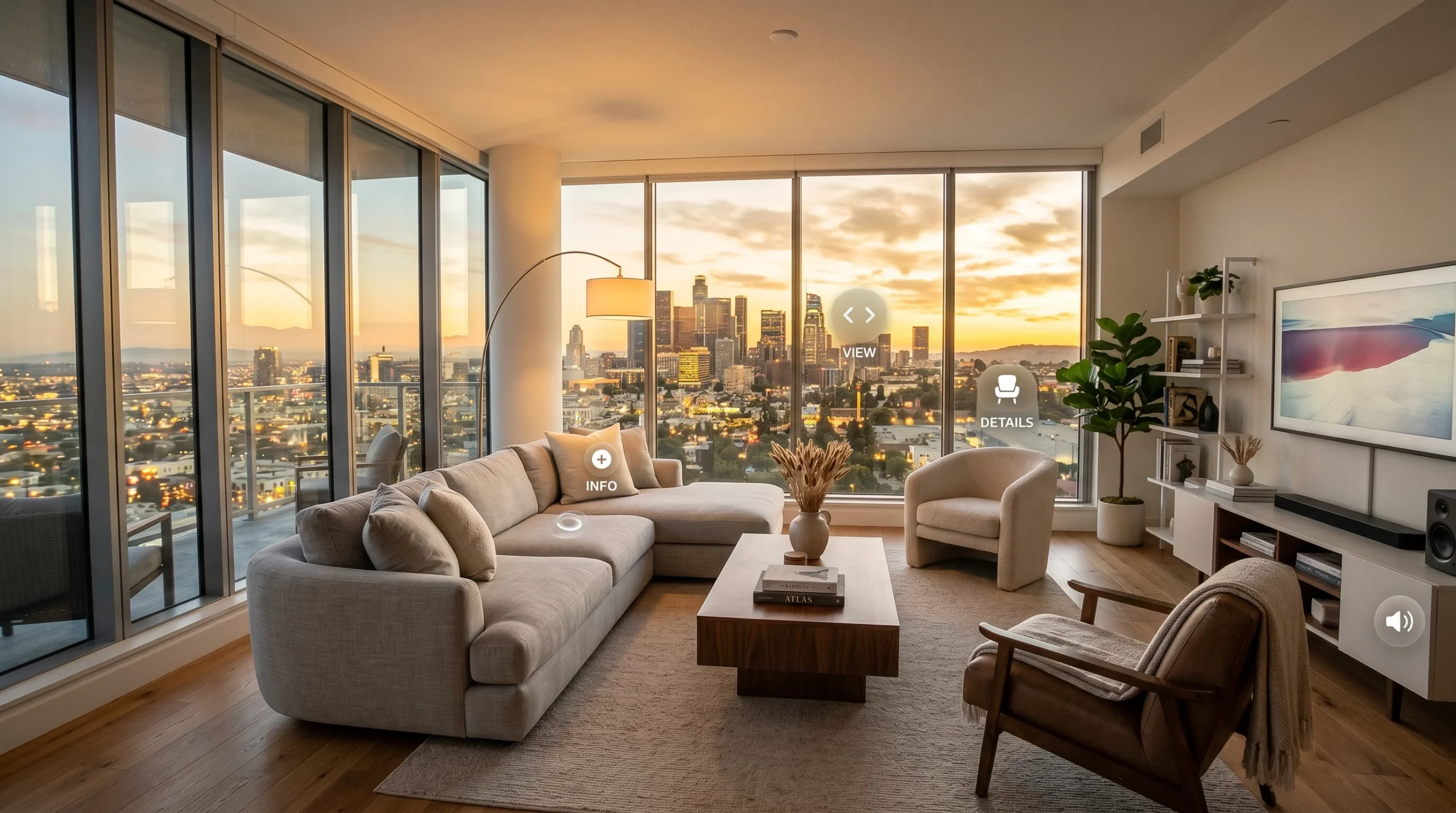
This page covers what a walkthrough actually is in 2026, the two main flavors we deliver, what the production looks like on our end, and where it fits — and where it doesn’t.
What a 3D walkthrough actually is
A 3D walkthrough is a navigable virtual representation of a space. The viewer moves through it, looks around, and inspects what matters to them. There are two technical families, and the difference matters more than most clients realize when they brief us.
360 panoramic tours. A connected set of spherical images stitched together at transition points. The viewer jumps between fixed nodes and pans around at each one. Cheaper, lighter, faster to deliver. Works on any phone. Good enough for most hospitality, real estate, and retail use.
Interactive virtual walkthroughs. A real-time 3D environment — built in a game engine or with WebGL — where the viewer moves freely, changes finishes, opens doors, switches day to night. Heavier to build, but the experience is closer to walking the space than to flipping through panoramas. This is where 3D architectural design and interactive front-end work meet.
Most clients arrive asking for “a virtual tour” and don’t know which family they actually want. We usually figure it out in the first call. If the budget is small and the goal is “let people look at the rooms,” panoramas. If the buyer needs to configure something — a finish, a layout, a furniture set — interactive.
Who 3D walkthrough services are actually for
The honest answer: anyone selling a space or a product where seeing it from one angle isn’t enough. Specifically:
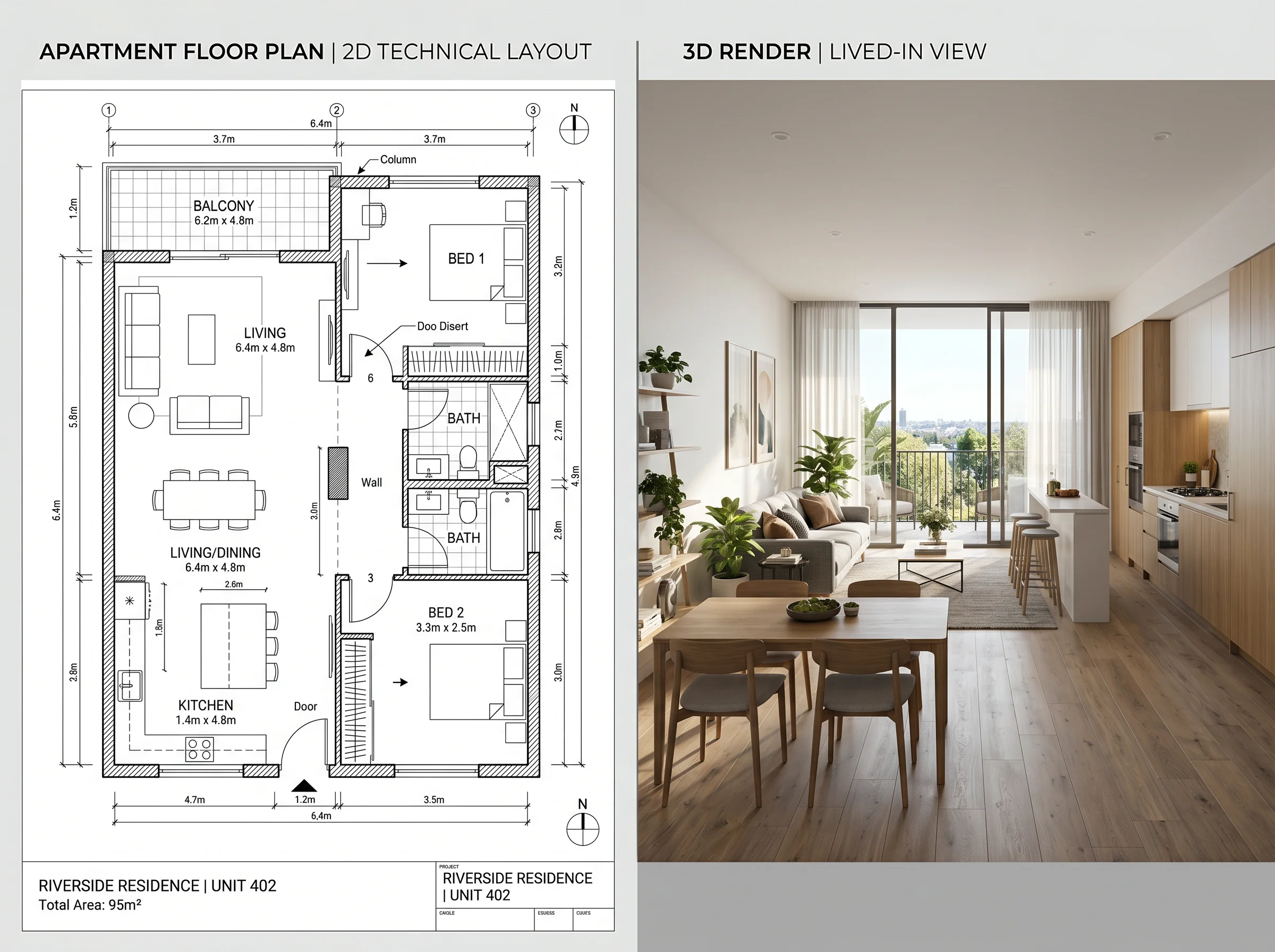
- Real-estate developers pre-selling units that don’t physically exist yet. A walkthrough closes the imagination gap a floor plan can’t.
- Hospitality operators — hotels, resorts, restaurants — where the on-site experience is the product. A tour gets a booking that a photo gallery won’t.
- Real-estate agencies doing remote viewings or showcasing a portfolio without burning a half-day per property.
- Showrooms, retail, automotive — anywhere the inventory or the space is the marketing.
- Museums, exhibitions, cultural venues needing to extend reach beyond physical visitors.
- Product manufacturers wanting a 360 view of an item with hotspots that explain what each part does.
It is not the right tool for every client. A single-product e-commerce listing usually wants a static render and a short turntable, not a full tour. A developer doing exterior pitches to investors often needs a cinematic flythrough — that’s 3D animation territory, not walkthrough. We’ll say so on the first call rather than upsell into the wrong format.
How we actually produce them
The workflow depends on whether the space exists yet.
For existing spaces
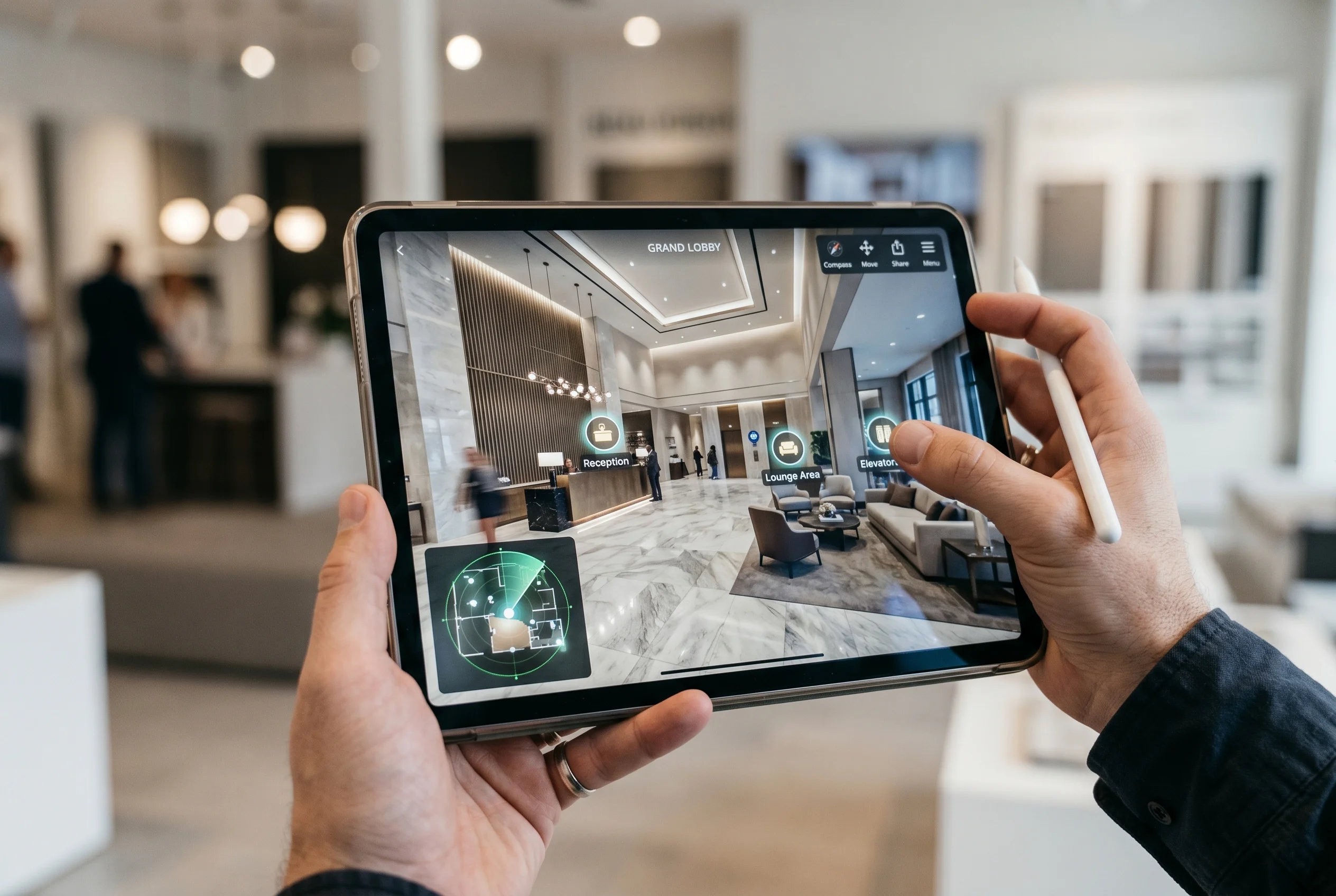
We shoot panoramic spherical photography on site (or we get a partner to shoot it). Images are stitched, color-corrected, and assembled into navigable tours with transition hotspots. If the client wants UI elements — info popups, embedded video, sound, day/night switching, a floor plan with radar — those get layered in during assembly. Output is web-deliverable: viewable on phone, tablet, or desktop. No downloads, no plugin.
For spaces that don’t exist yet
This is most of our work. We build the space in 3ds Max from the architect’s drawings or our own architectural model, light it, dress it with materials and furniture, and render the panoramas out of Corona. The output is identical to a real-world shoot from the viewer’s perspective. For a developer pitching off-plan apartments, this is often the only option — the building isn’t standing yet.
For fully interactive walkthroughs
The model goes into a real-time engine — Three.js for browser-based, a game engine when the experience needs to be heavier. We optimize geometry, bake lighting where it makes sense, write the interaction layer, and ship something the client can embed on their site or hand to a sales team on a tablet. This is the slowest path of the three. It’s also the one that turns into a sales tool people remember.
What ships at the end
- Web-embeddable tour, hosted on the client’s domain or ours.
- Standalone build for offline use at exhibitions, sales centers, or on a tablet.
- Source panoramas in equirectangular format if the client wants them for other platforms.
- UI components — control panel, mini-map, hotspot popups, day/night toggle, finish selectors — assembled into the tour or designed as separate modules.
- For interactive builds: source project files where commercially reasonable, and a documented handoff so the client’s web team can maintain it.
Where walkthroughs change the sales conversation
A floor plan asks the buyer to imagine. A walkthrough doesn’t. That’s the entire pitch, and it’s the reason real-estate agencies and developers keep coming back to this format. We’ve written about this dynamic in more detail in the piece on how visualization helps real-estate agencies increase sales — short version: people decide faster when they’ve already “been” somewhere.
Hospitality is similar. A hotel page with a tour gets a booking that a gallery wouldn’t. Not because the photos were bad — because the tour answered a question the photos couldn’t: what is it actually like in there?
The honest limits
A walkthrough is not a substitute for being there. Lighting on a sunny Tuesday in Mallorca will always beat a render. What a walkthrough does is close enough of the gap that a buyer feels confident enough to commit — to a viewing, a deposit, a booking, a meeting.
It’s also not free. Panoramic tours are reasonable. Fully interactive WebGL walkthroughs cost more — sometimes a lot more — because the engineering load is real. We scope honestly: if the budget only supports panoramas, we build panoramas and they do the job. If the use case genuinely needs interactivity, we say so before anything gets built.
Why work with us specifically
We’ve been delivering 3D visualization for over 2 decades. 1,500+ projects across archviz, product CGI, animation, and interactive web — which means we’ve built walkthroughs for spaces that didn’t exist yet, spaces that already existed, and spaces that were still being argued about by the design team. We’re not the world’s best at any single niche. We are unusually capable across the full stack — modeling, rendering, animation, WebGL, the front-end glue that ties them together — without subcontracting the interactive piece out to someone else.
For most studios, the interactive layer is where projects fall apart. For us it’s the part we like.