
Most product shots fail for the same reason: the lighting is wrong, the materials read flat, and the camera tells you nothing about how the thing actually works. 3D product visualization fixes those problems at the source — we build the product once, light it properly, and you can shoot it from any angle, in any environment, in any finish, without ever touching a softbox.
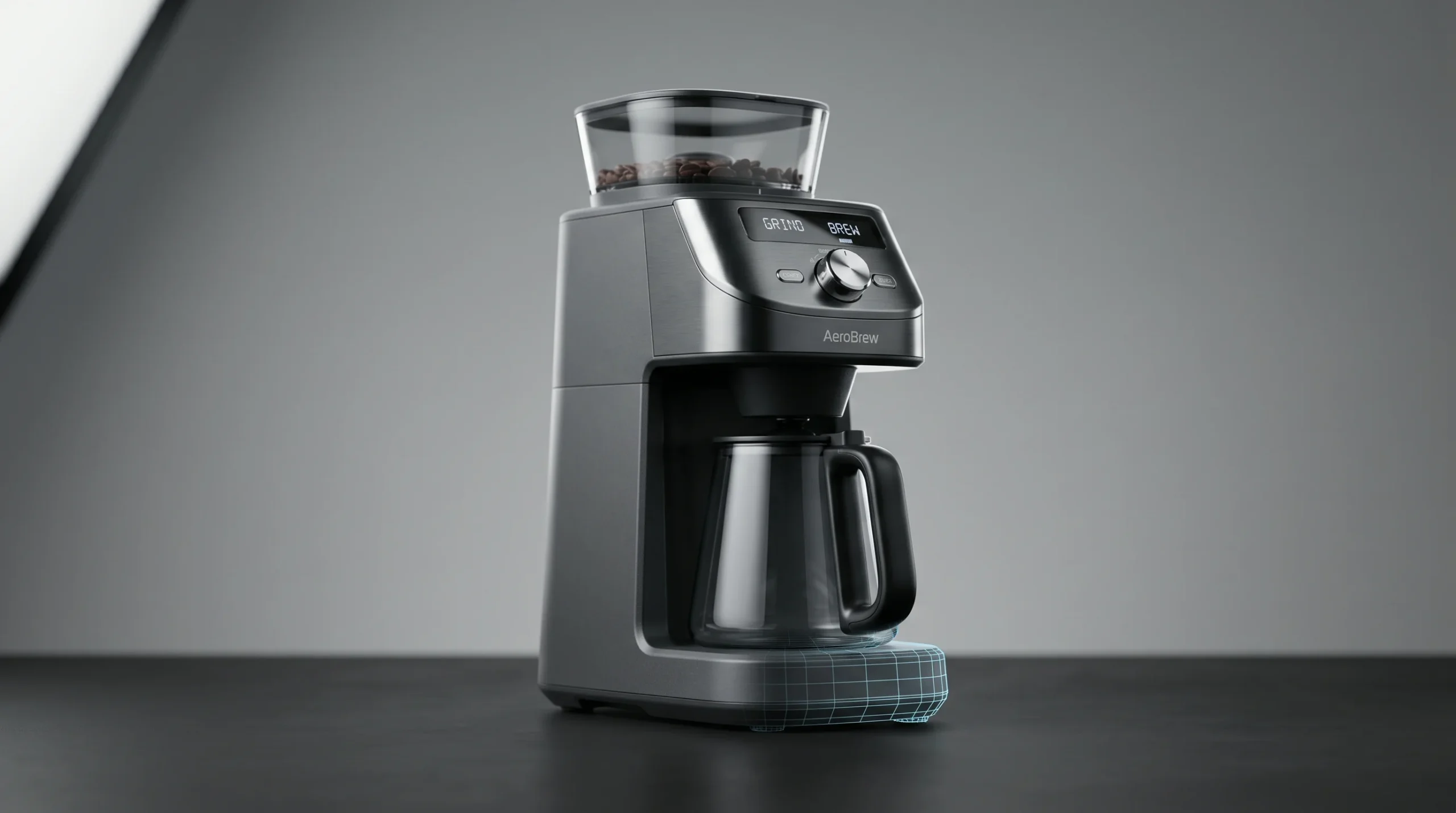
This page is for the people who actually buy the work: product manufacturers, marketing teams, advertising agencies, and e-commerce brands that need clean, on-brand imagery and short explainer animations. Below is what we deliver, what we need from you, and the honest scope of what makes sense to render versus photograph.
Who 3D product visualization is for
Roughly half of our product work comes through agencies who have a client with a deadline and no usable photography. The other half comes direct from manufacturers — usually industrial or consumer goods companies launching a new SKU, refreshing a catalog, or building out assets for a configurator. Specifically:
- Manufacturers of consumer products, industrial equipment, machinery, and furniture who need marketing imagery before the physical product is finished, or who want a single visual library that works across web, print, trade-show, and packaging.
- Marketing teams and ad agencies running campaigns where photography isn’t practical — the product is too large, too small, not yet built, sold in a hundred color variants, or needs to be shown in environments that would cost a fortune to stage.
- E-commerce brands that want consistent hero shots and 360° spins across an entire catalog without re-shooting every season.
- Manufacturers building product configurators who need the 3D base assets that drive material and option swaps in the browser.
If you’re a hobbyist looking for a single render of a personal project, we’ll usually take that too — just say so up front so we can scope it accordingly.
What we deliver
We work in 3ds Max with Corona Renderer as our primary pipeline. Output is whatever you need it in:
- Still renders — PNG, JPG, or layered PSD with separate passes (diffuse, reflection, shadow, AO, alpha) so your retoucher can keep working.
- Marketing imagery — hero shots, lifestyle scenes, packaging visuals, banner-ready compositions in whatever aspect ratios the campaign needs.
- Turntables and 360° spins for product pages and configurators.
- Product explainer animations and short ads — exploded views, assembly sequences, how-it-works walkthroughs. We handle the modeling, animation, and post in After Effects or Premiere.
- Render-ready 3D assets when the deliverable is the model itself — for use in your own pipeline, a web configurator, or a downstream agency.
If the project is a high-volume catalog job (think hundreds of SKUs for an online retailer), we’ve done that scale of work before and we’ll set up the asset pipeline accordingly — shared shaders, naming conventions, a render queue you can audit. Doing one render and doing 400 are different problems.
What we need from you
The cleaner the input, the faster the first render. In rough order of preference:
- STEP, IGES, or other CAD files — ideal. We import directly, clean up the geometry, fix normals, and rebuild materials. Most industrial product work starts here.
- Native 3ds Max, Blender, or SolidWorks files — also fine, even better when materials are already roughed in.
- Drawings, dimensions, and reference photos — works for furniture, consumer goods, and anything where you don’t have CAD. Slower start, but we’ve modeled plenty of products from a tape measure and a phone gallery.
- Brand guidelines, color codes, and material samples — anything that pins down the look you actually want. Pantone numbers and finish photos beat “make it look premium” every time.
If you don’t have any of the above and you’re starting from a concept sketch, we can still help — that’s closer to 3D prototype design than visualization, and the conversation shifts from “render what exists” to “design and render what could.”
Where 3D product visualization beats photography
An honest take, because photography is sometimes the right answer and we’ll tell you when it is:
- The product doesn’t exist yet. Pre-launch marketing, investor decks, packaging artwork, trade-show materials — all needed before the first unit comes off the line.
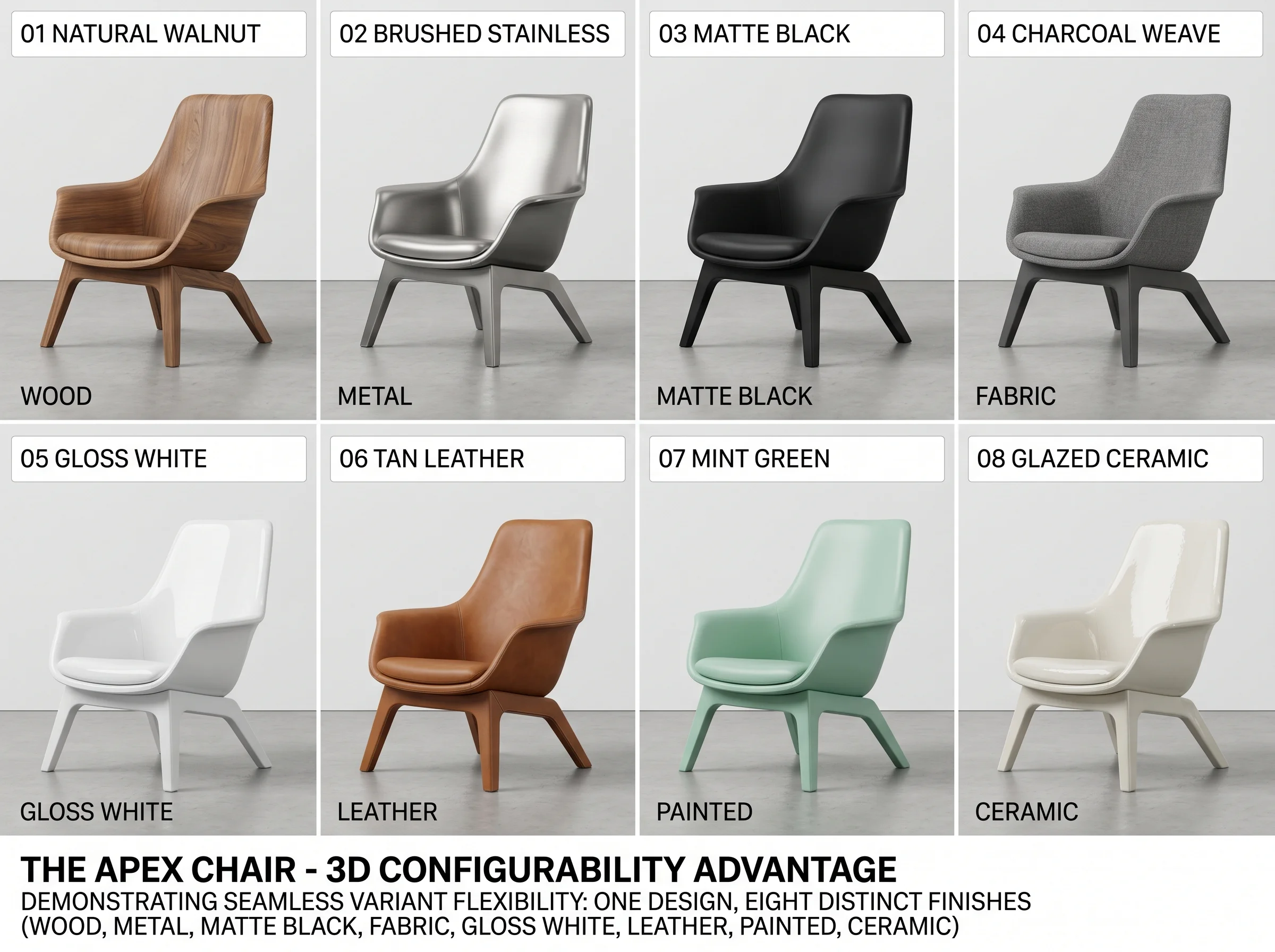
- You sell variants. Twelve fabric options, eight wood finishes, four sizes. Photography means 384 setups. 3D means one model and a material library.
- The environment is the problem. Heavy machinery in a clean factory shot. A kitchen appliance in a kitchen that doesn’t exist yet. Outdoor furniture in golden hour without paying for a location.
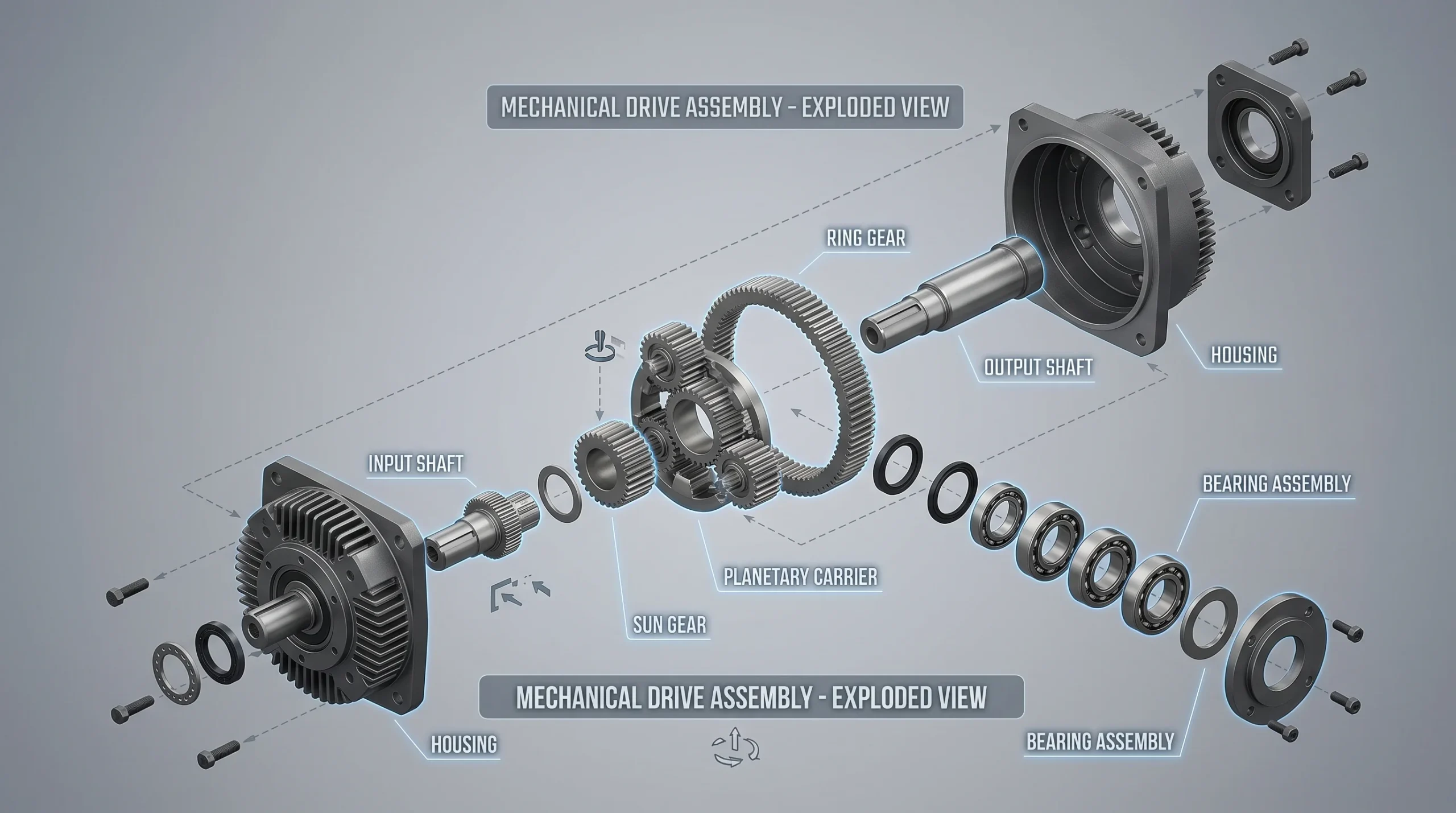
- You need an exploded view or cutaway. Photography can’t show the inside of a sealed product. We can.
- Catalog consistency matters. Every product on the same backdrop, same lighting, same angle, year after year, with no drift from one photoshoot to the next.
Where photography wins: anything truly textural and tactile where the material itself is the sell — handmade leather, hand-finished wood with character grain, fabrics where the weave is the whole story. We can render those, but the production cost goes up and at some point a good photographer is more sensible. We’ll say so.
Our process, roughly
Every job is different but the shape is similar:
- Brief and scope. What the deliverables are, how many, what aspect ratios, what’s the final use. Half the project happens here. Vague briefs produce expensive surprises.
- Modeling. CAD import and cleanup, or modeling from scratch. We flag anything geometric that won’t read well at the final render resolution and ask before we polish it.
- Look development. Materials, lighting, camera. Usually one or two early WIP frames at this stage so we’re not all surprised at the end.
- Render and post. Final passes out of Corona, retouching in Photoshop where it’s faster than redoing the render. Both are normal — anyone delivering raw, unprocessed frames is leaving quality on the table.
- Delivery and revisions. Layered files where useful, a round or two of feedback baked into the scope.
If the brief expands mid-project, we say so before we start the extra work — not after the invoice.
How this connects to our other product work
3D product visualization sits inside a broader product pipeline. Same software, same team, related deliverables:
- If your need is more about catalog-grade still renders at volume, see our notes on 3D product rendering services.
- If you’re a furniture brand specifically, we’ve covered the workflow particulars in 3D furniture modeling.
- If you need motion — assembly animations, feature walkthroughs, short ads — that’s the animation side of the same pipeline.
- If you need interactive 3D in the browser (configurators, material switchers, web showrooms), we build those too. That’s one of the things that genuinely sets us apart from typical viz studios.
Track record
The studio has delivered over 2 decades of product visualization work — large furniture libraries for online retailers, configurator asset packages, industrial machinery for marketing campaigns, consumer products for advertising, and one-off renders for small businesses. We’re not the best viz studio in the world at any one narrow niche. We’re a studio that’s done a lot of product work, across a lot of categories, and can usually see the shape of your project from the first email.
That’s worth more than it sounds. On most product jobs the costly mistakes happen in the first hour of scoping, not in the rendering. Having seen the same kinds of jobs many times means we usually catch them before they become anyone’s problem.