
3D jewellery visualization is the part of the process where a ring, pendant, or earring exists as a precise digital model before anyone touches metal, wax, or a printer. For designers it shortens the loop between idea and approval. For brands it produces marketing imagery that a photo shoot cannot match — flawless stones, clean reflections, identical lighting across an entire collection. Used well, it is one of the most cost-effective tools a jewellery business has. Used badly, it is a stack of plausible-looking renders that nobody can cast from and nobody believes.
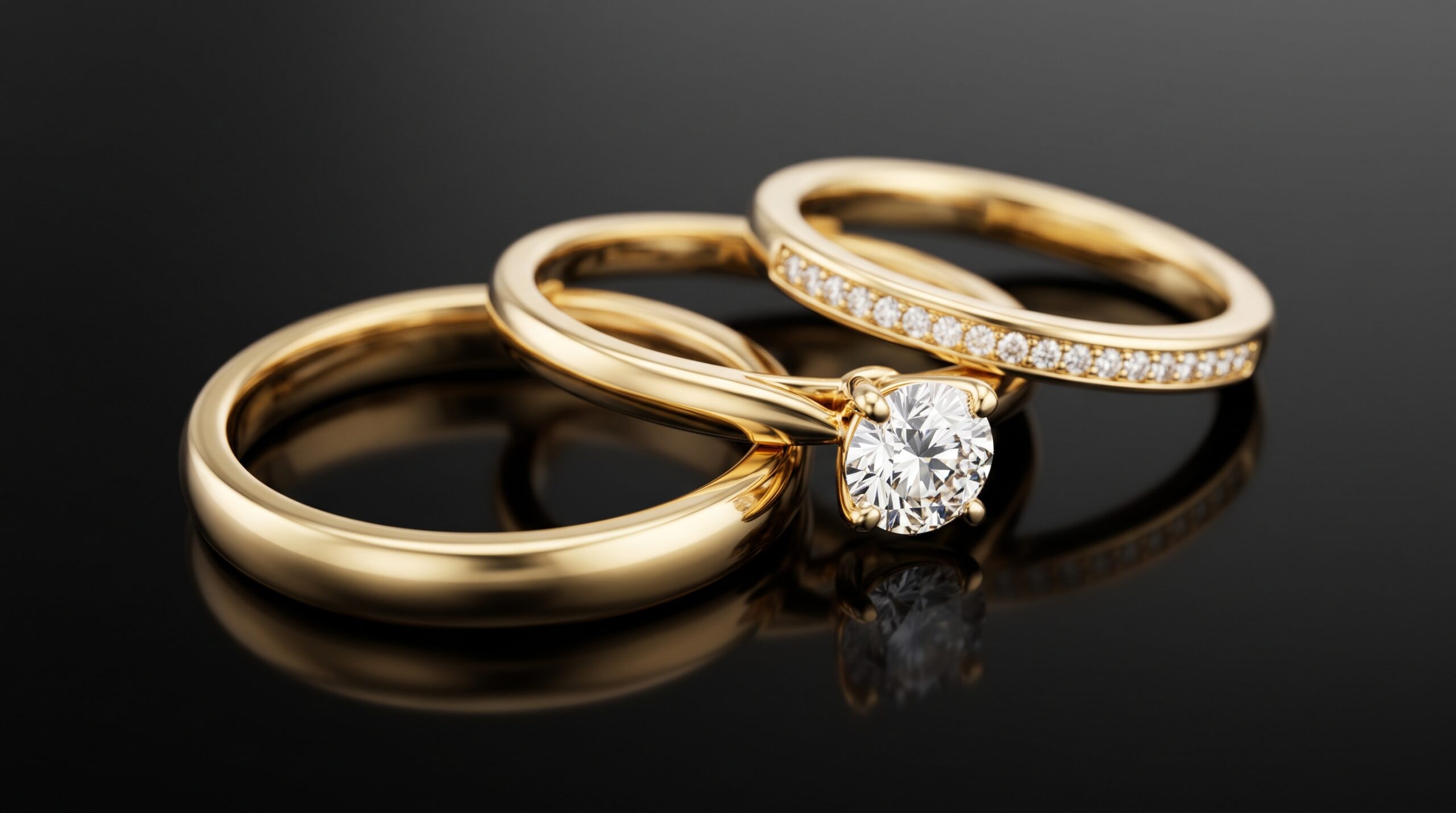
This page covers how we approach jewellery CGI as a 3D studio, what is realistic to expect, and where the line sits between visualization work and the actual manufacturing side.
What 3D jewellery visualization actually delivers
There are two distinct outputs people lump together under “jewellery CGI” and it is worth separating them up front.
- Photoreal still renders. A high-resolution image of the piece for catalogues, web stores, lookbooks, social, or pitch decks. Studio lighting, controlled background, often a transparent or pure-black variant for compositing later.
- Animation and turntables. Short clips — a slow rotation, a hero shot, an open-and-close on a clasp, a stone catching light. These are the closest thing to letting someone hold the piece without sending it in the post.
The model underneath both can also be re-used for a 3D-print-ready file when manufacturing wants it, but that is a separate decision with its own technical constraints. We will come back to that.
Why brands and designers use it instead of photography
Photographing jewellery well is genuinely hard. Stones throw caustics that a camera flattens, brushed metal gets blown out, prongs disappear into shadow. The studio time and retouching needed to get a fifty-piece collection looking consistent is significant — and the moment you tweak a setting the next season, you redo the shoot.
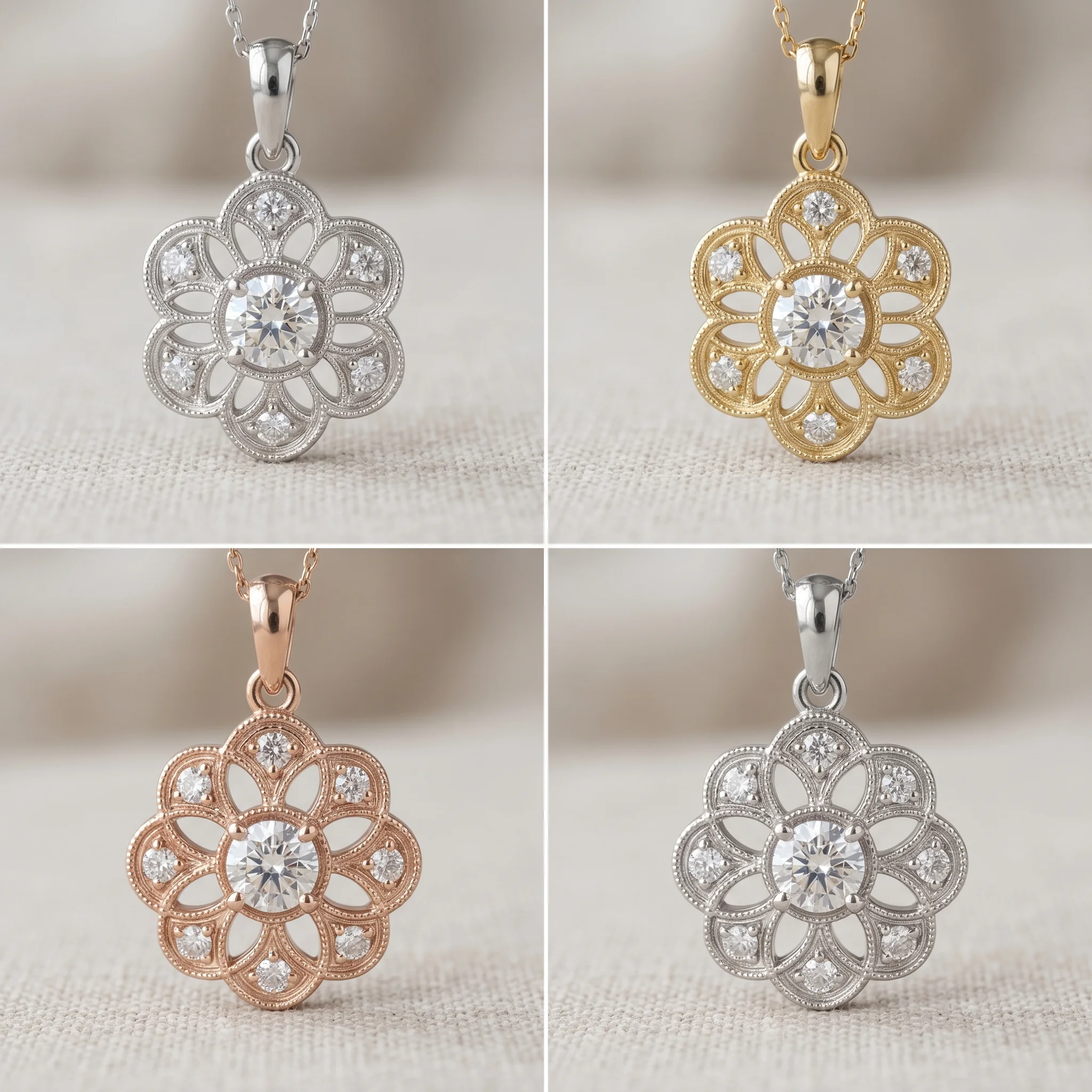
A 3D model removes most of that friction. Lighting is set once. Backgrounds swap in a click. A ring can be re-rendered in white gold, yellow gold, and rose gold from the same file without re-photographing anything. For e-commerce catalogues that update frequently, the math gets very favourable very quickly.
There is a less talked-about benefit too: you can render the piece before it physically exists. A designer pitching a private client, a brand testing a concept with focus groups, a marketing team building campaign assets for a collection that is still in production — all of them can move months earlier than they could with photography.
Our workflow for a jewellery piece
Every studio does this slightly differently. Here is how we actually handle it.
- Reference and brief. Sketches, CAD if you already have it, photos of similar pieces, mood references, stone specs (cut, size, count, colour). The more concrete the input, the less guessing on our side. Vague briefs cost everyone time in revisions later.
- Modeling. 3ds Max for the bulk of the geometry, ZBrush when an organic motif, filigree, or sculpted detail needs real surface work. Symmetry is enforced in software, which is genuinely difficult by hand and one of the under-appreciated wins of doing this digitally.
- Materials and stones. Metal shaders calibrated for gold, white gold, rose gold, platinum, silver — each behaves differently under the same light. Stones use physically-based dispersion settings so a brilliant cut actually fires colour the way a real one does. This is where cheap jewellery renders fall apart.
- Lighting and camera. Studio HDRI plus targeted area lights. Camera angles agreed early so revisions stay focused on the piece, not on whether we should have shot from above instead.
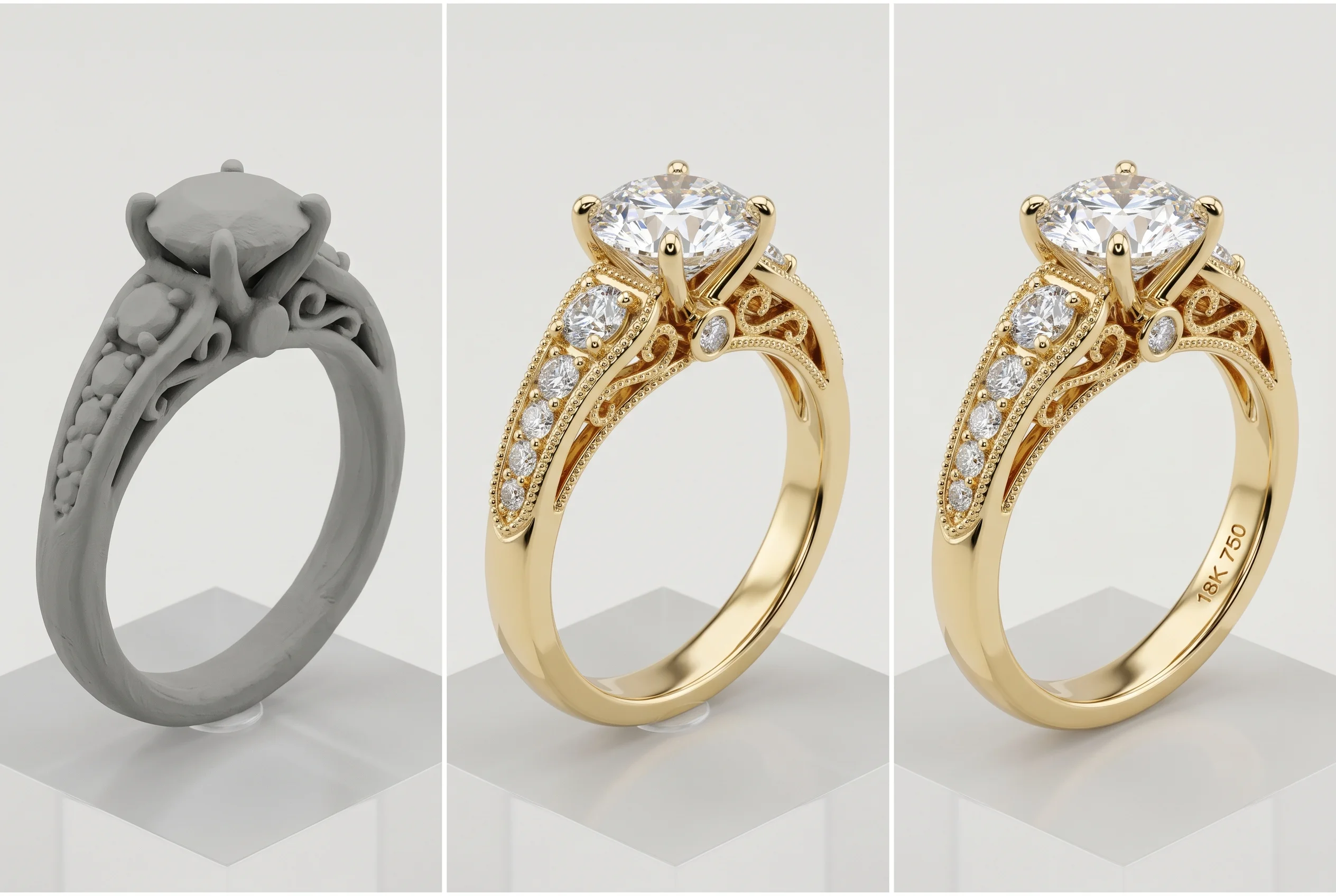
- Rendering in Corona. Photoreal output, ACEScg colour pipeline where the client needs it. We do clay-render previews before committing to final lighting — half the value of a clay render is that everyone shuts up about texture choices until the camera angle is locked.
- Post and delivery. Light retouching in Photoshop, alpha channels included, PSDs when the client wants layered files for downstream design work. Animation goes through After Effects for grading and any motion graphics overlay.
For animations we add a storyboard step before camera work. A ten-second product clip looks simple but it is built from very deliberate choices — where the light moves, when the stones fire, how the piece enters and leaves frame. Skip that step and you get expensive footage that nobody wants to use.
Models for casting and 3D printing
This is the part that needs an honest scope statement. We do design-side 3D modeling, which means we can deliver a clean, watertight, manifold mesh that a jeweller or service bureau can take to wax printing or direct metal print prep. We are not running the casting house. We are not specifying tolerances for a specific printer or alloy unless that information comes from the client. We can model to a printable standard if you tell us the standard you need.
If your goal is purely marketing imagery, you do not need a print-ready model and we will not build one — it adds time you do not need. If you do need both, we organize the project so the visualization model and the production model share a common base and diverge only where the technical constraints demand it. Stone seats, prong geometry, undercuts — those get reworked for print. The hero render geometry stays cleaner.
Who actually needs this
- Independent jewellery designers. Pitching custom pieces to private clients without burning bench time on a sample. A rendered approval cycle is far cheaper than a wax cycle, and you can do three variants before committing.
- Jewellery brands launching a collection. Catalogue, e-commerce hero images, social cuts, campaign stills — all from one model set, all colour-consistent across the line. Re-shooting a collection because the brand decided to refresh backgrounds is a real expense; re-rendering one is mostly compute time.
- E-commerce retailers. Especially for configurable lines where customers pick metal and stone. One model, many variants, no separate photo shoot per SKU.
- Marketing and creative agencies. Building campaign assets where the piece has not been manufactured yet, or where physical photography would not survive the planned compositing work.
- Investor and pitch decks. When a designer or brand needs to show a future product line to people writing cheques. Most investors will not spend an hour decoding sketches or wax models; a rendered piece reads instantly.
Where it does not fit: a one-off vintage piece you already photographed well, or a project where the manufacturing question dominates the visualization question. In those cases the budget is better spent elsewhere and we will say so.
What we look at when scoping a project
A handful of details change the cost and timeline of jewellery CGI more than anything else: the complexity of the piece (a plain band versus a pavé-set cluster ring is an order of magnitude apart), the number of stones, whether it animates or just renders, how many metal and stone variants you want, and the resolution and aspect ratio for delivery. A single hero render of a clean ring is a different project from a thirty-piece collection rendered in three metals each. We scope both honestly and we do not pad. If you want to see what that scope looks like as working software, we took one of our own builds apart in public: a browser-based ring configurator where the geometry is generated from its parameters rather than picked from a library of pre-made models.
Jewellery CGI also sits next to a few related services we do — broader 3D product visualization for consumer goods, product animation for ads and explainers, and the kind of agency-side production support where we plug into someone else’s campaign pipeline. If your project lives across more than one of those, that is normal. We tend to handle them together rather than handing files between vendors.