
3D product animation services exist for one reason: a still render only goes so far. The moment a client needs to show how a mechanism opens, how parts assemble, or how a feature works under the hood, the brief stops being a render brief and starts being an animation brief. That shift changes the budget, the pipeline, and the conversation with the marketing team paying for it.
Art Land Design has been producing product animations as part of our wider visualization work for over 2 decades — across consumer goods, industrial equipment, construction machinery, and furniture. This page covers what we actually deliver, how the work moves from CAD file to finished cut, and where animation makes sense versus a sequence of still renders.
What 3D product animation services actually deliver
The phrase covers more ground than most clients realise. In practical terms, when a manufacturer or agency commissions us, the deliverable is usually one of these:
- Explainer animations — a 30-to-90-second cut showing how the product works, how it assembles, or what makes it different from competitors. Usually for trade shows, sales decks, or a hero video on a product landing page.
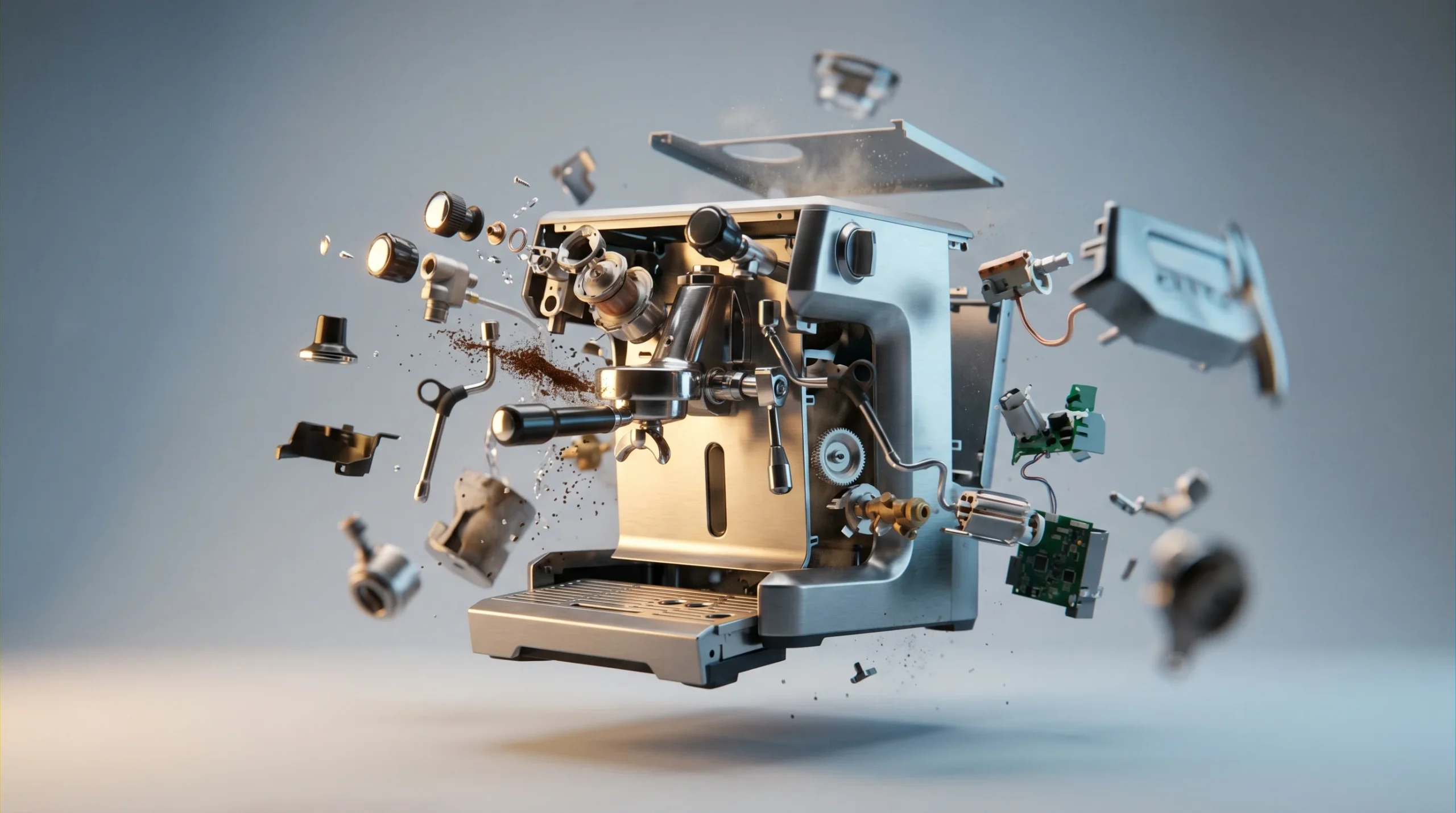
- Exploded-view sequences — components separating, labelling overlays, and a slow rotation to camera. Engineering teams love these. So do investor decks.
- Product ads / social cuts — short, punchy, edited to music. 15s, 30s, 60s. Usually delivered in multiple aspect ratios for paid media.
- Feature highlight loops — silent, looping animations for e-commerce pages and email campaigns where autoplay-without-sound is the norm.
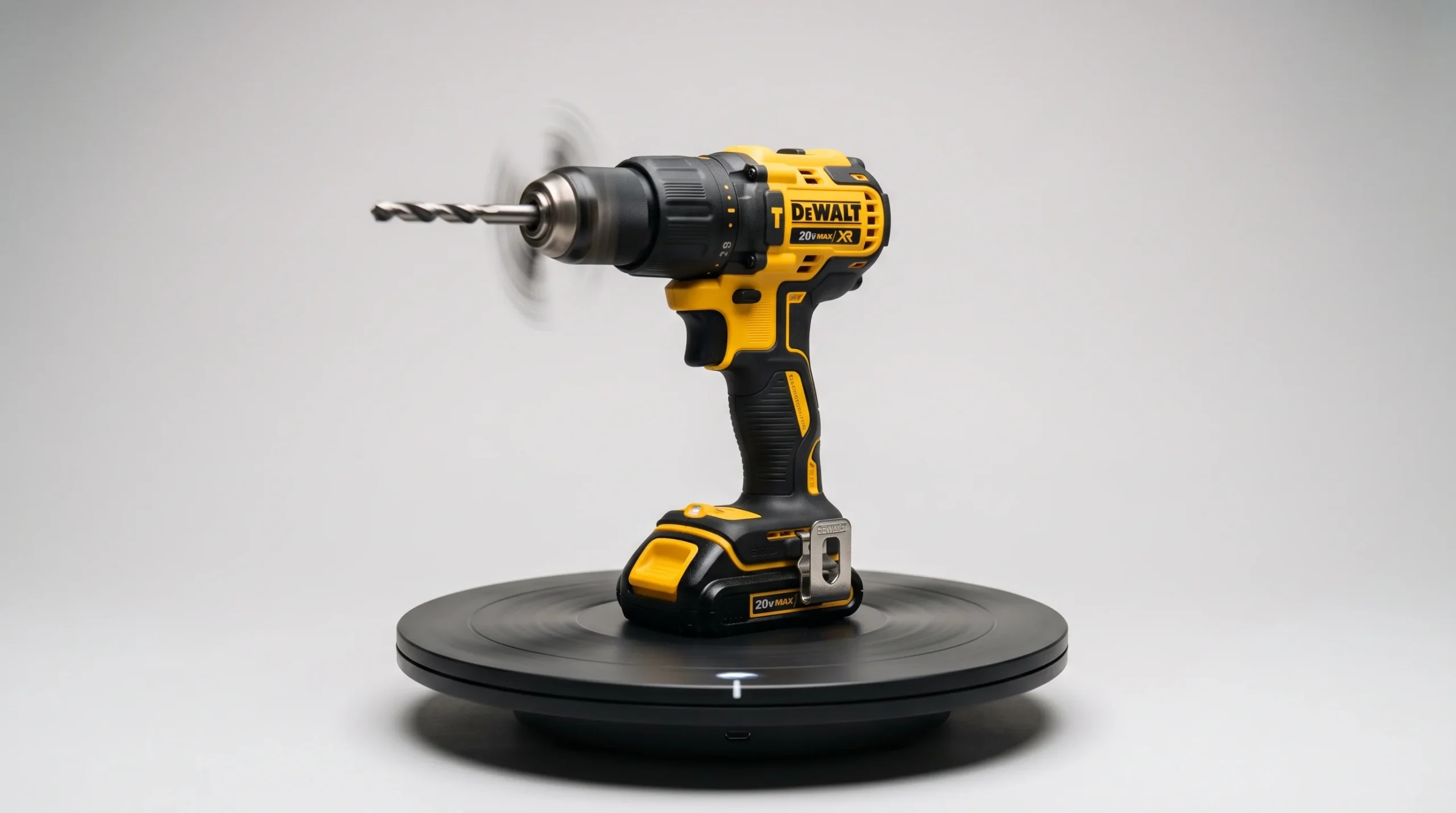
- Hero turntables and beauty shots — the simplest format. A clean rotation, soft studio lighting, no narrative. Useful when the product itself is the story.
What we do not deliver here is live-action editing or stock-footage compositing dressed up as 3D. Everything is built from the CAD or geometry up. That distinction matters when you compare quotes — a lot of “3D animation” sold online is really 2D motion graphics with a 3D-looking shader.
The pipeline, from STEP file to final cut
Most product jobs start the same way: a manufacturer sends us a STEP or IGES file from the engineering team, plus a marketing brief that has almost nothing to do with the engineering file. Bridging those two is the actual work.
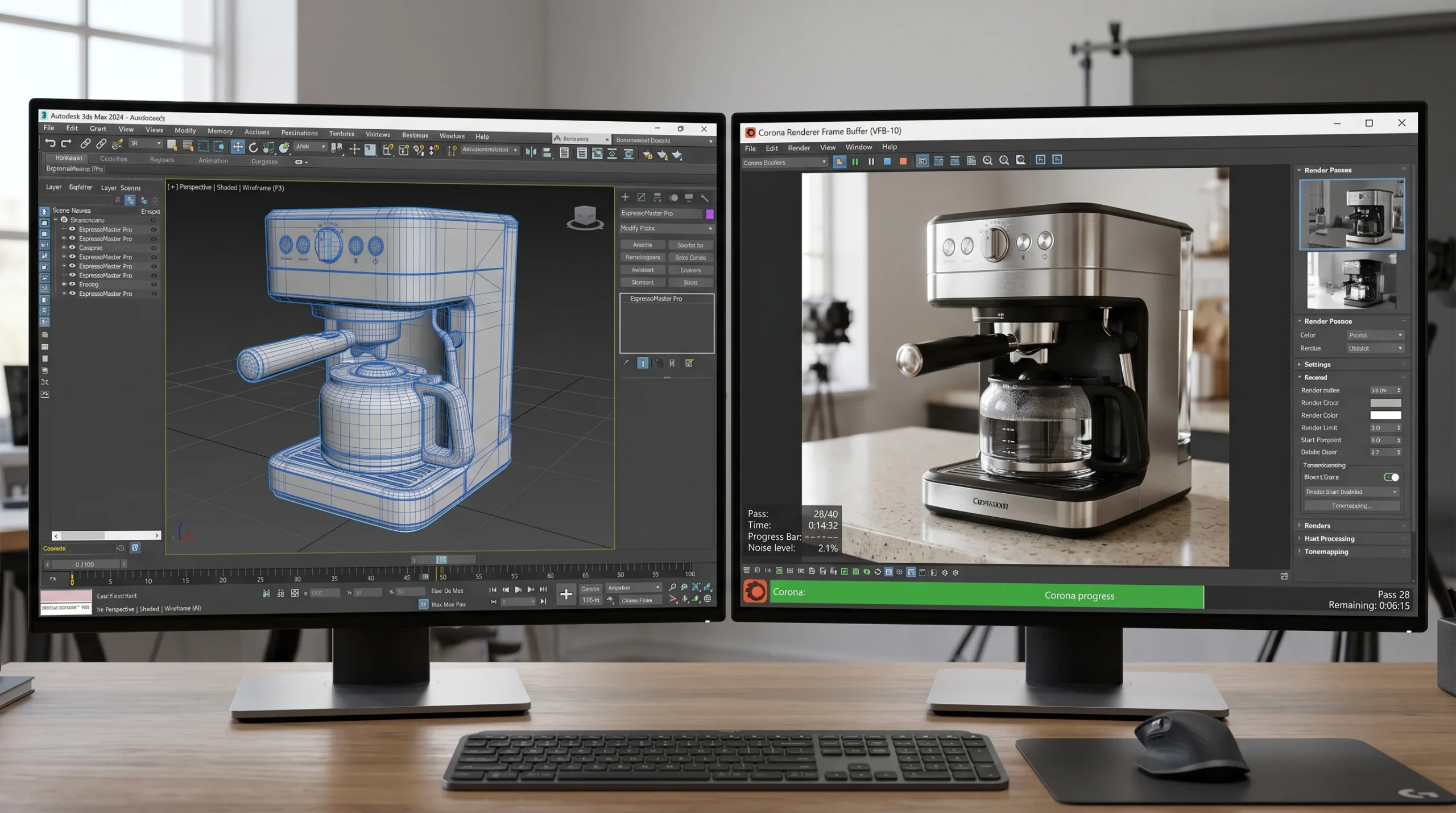
- CAD import and cleanup. STEP geometry is rarely render-ready. We retopologise where needed, fix normals, separate components for animation, and strip out internal parts the camera will never see.
- Materials and shading. Built in 3ds Max with Corona Renderer. Brushed metal, anodised aluminium, soft-touch plastics, painted finishes — each one tuned against reference photos the client sends.
- Layout, lighting, and camera. This is where the marketing brief takes over from the engineering brief. Camera framing, key lights, the colour temperature of the studio backdrop — all dialled to match the rest of the brand.
- Animation. Keyframed in 3ds Max. For mechanical motion we work from the engineering reference; for cinematic camera moves we work from storyboards.
- Rendering. Corona, network-rendered. Most cuts are 24 or 30 fps, depending on delivery platform.
- Compositing and edit. After Effects for motion graphics, type, and overlays; Premiere for the final assembly, music, and colour. Delivered in the formats and aspect ratios the agency or media buyer specified at brief stage.
The honest part: serious projects always have some change orders. A camera angle that looked great on storyboards reads wrong at full resolution. A material the client signed off on doesn’t match the in-store sample under the photographer’s lights. Build a couple of revision passes into the schedule and the project ships on time. Skip them and it doesn’t.
When animation makes sense, and when stills are enough
Half the cost-control conversations we have with clients are about this. Animation is not always the right answer.
It earns its budget when the product has moving parts, when the feature is hard to describe in a single image, when the deliverable is a video ad rather than a brochure, or when the brand wants something the competition can’t copy with a phone photo. For everything else, a strong set of stills from our product visualization service usually does more for the budget than a mediocre animation does.
A rough heuristic we use with new clients: if you can explain the product to your mother in one sentence, you probably don’t need animation. If you find yourself saying “and then this part rotates and the inside flips out” — yes, you need animation.
Where 3D product animation services fit alongside other formats
Animation rarely lives alone. Most of the briefs we work on combine formats:
- Stills plus animation. Hero stills for print, packaging, and PR; a short animation for the website hero and social cuts. Same CAD, same materials, same lighting setup — much cheaper to produce together than separately.
- Animation plus interactive web. The animation runs as the hero video; behind it sits a Three.js configurator letting the customer change colour, finish, or accessory. We build both.
- Animation plus architectural context. Product placed inside a CGI environment — useful for furniture, appliances, and anything where the room sells the product. Closer in feel to our architectural animation work than to a pure studio render.
What we ask for at brief stage
The quote we send is only as good as the brief you send us. The fastest projects start with these inputs already in hand:
- The latest CAD or 3D file (STEP, IGES, OBJ, FBX — STEP is fine).
- Reference photos of the real product under real lighting. Phone photos are fine.
- Brand guidelines or at minimum, the brand’s primary colours and fonts.
- A rough idea of duration, aspect ratios, and where the cut is going to run.
- Any music or voiceover you’ve already commissioned. If you haven’t, say so — we can suggest options.
Missing pieces are normal. We start working with what you have, flag the gaps early, and lock specifics before any expensive frames get rendered.
The studio’s track record on product work
Art Land Design has delivered 1,500+ projects across architectural visualization, product CGI, and animation. Product animation isn’t a side hobby — it’s a regular line of work for us, sitting alongside 3D product animation stills, explainer videos for industrial clients, and ad cuts for marketing agencies whose end clients are much larger than the agency itself.
We won’t claim to be the world’s best at any single niche. What we will claim is that after over 2 decades of this work, the patterns are familiar and the surprises are rare. That is what manufacturers and marketing teams actually pay for — a studio that has shipped this kind of cut before, knows where the rough edges are, and won’t burn through your budget figuring out the basics on your dime.
For a wider view of formats we deliver — animation, stills, interactive WebGL, 360 panoramas — see our full 3D solutions lineup.