
The phrase “3D character design creator” gets searched by people with very different problems. Some need a mascot for a brand. Some need a hero for an indie game. Some have a script that needs a digital cast. The pipeline is not the same for all of them, and pretending otherwise is one of the reasons most articles on this topic read like rewrites of each other.
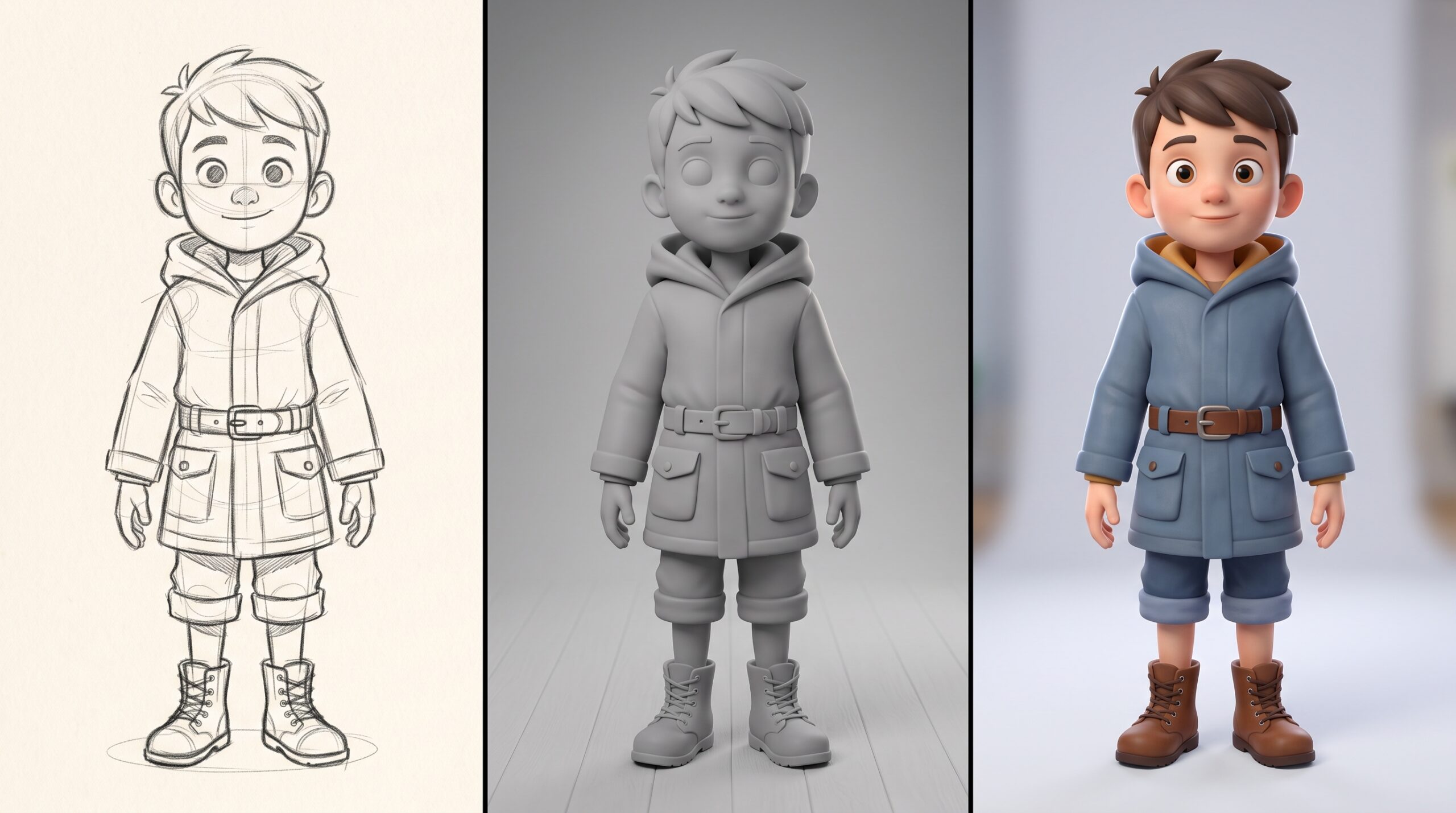
Character design and animation is a secondary service at our studio. Most of our work is architectural visualization, product CGI, and animation for buildings and goods. But characters come through often enough that we’ve built a workable pipeline around them — and the honest version of that pipeline is what this article is for.
What a 3D character design creator actually does
Strip the marketing copy away and the job is: take an idea — verbal description, sketch, or a vague hand-wave from a director — and end up with a rigged, textured, animation-ready 3D model that holds up at whatever resolution the project needs. That’s it. The complexity hides in two places: the front end (concept work and approvals) and the back end (rigging and rendering choices made for the specific use case).
The reason character work has more variables than, say, a product render is that nothing is fixed. A washing machine has dimensions on a spec sheet. A character has personality, weight, age, history, and a hundred design decisions that all need to feel like the same person.
Concept first — and yes, on paper
We start in 2D. Concept artists work from whatever the client brings: a description, a mood board, reference images, sometimes just a name. Rough sketches first, two or three directions, then one gets chosen and the artist refines it.
This stage isn’t optional, even when clients want to skip it. Skipping concept work and going straight to 3D is how you end up four weeks in with a character nobody loves and nobody wants to say so. The cost of redoing a sculpt is much higher than the cost of redrawing a sketch.
What we want out of concept before touching 3D:
- Front and three-quarter view of the character.
- Notes on proportions — is the head exaggerated, is the silhouette wide or narrow.
- Clothing, props, weapons, accessories — each one separately referenced.
- Color palette locked or at least narrowed to two or three options.
- Expression sheet if facial animation matters.
If the project is for advertising and the character is a cartoon mascot, this stage is shorter. If it’s a hero character for a game or animated film, concept can take longer than the entire 3D build.
Modeling: high-poly, low-poly, or both
The biggest fork in the road is what the model will be used for. The same character ends up built three different ways depending on whether it’s heading to a film render, a real-time game engine, or a TV commercial.
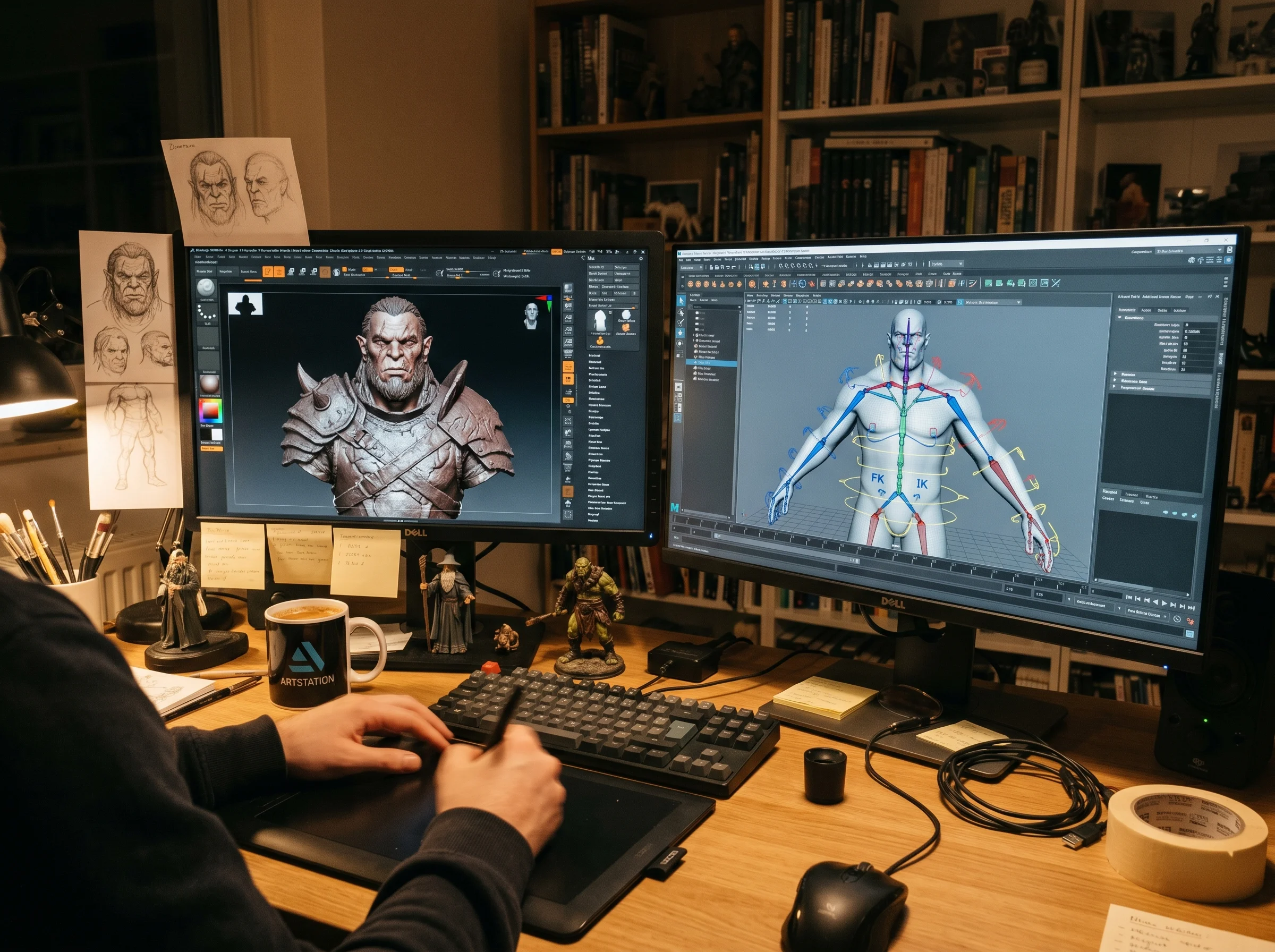
Realistic film or hero-shot work. Sculpted in ZBrush, every wrinkle and pore handled at the geometry level, then retopologized to a clean animation-friendly mesh. UVs, baked normal maps, displacement maps. Materials in Corona Renderer for static renders, or game-engine PBR materials if the work is going into real-time.
Cartoon or stylized characters. Often modeled directly in 3ds Max or Blender as medium-poly geometry. Textures hand-painted or procedurally generated. Less sculpting, faster pipeline, much less back-and-forth on micro-details because cartoon characters don’t have realistic micro-details.
Game-engine assets. Low-poly geometry, optimized UVs, baked-in detail from the high-poly. Tested in-engine for poly budget and texture memory. This is its own discipline and the constraints drive every decision upstream.
Most clients don’t know which version they need. Half of getting the brief right is asking enough questions early to figure that out before anyone starts modeling.
Rigging is where projects quietly get expensive
Rigging — building the skeleton, controls, and deformation behavior that lets an animator pose the character — is the step where time can balloon if nobody pinned down the requirements up front. A static beauty render needs almost no rig. A character that has to walk, talk, gesture, and lip-sync needs a serious one. A character that has to do all of that and also wear a long coat that flows correctly needs a serious rig plus cloth simulation setup.
We’ve seen projects assume a “simple animation” budget and then ask for full facial performance once the model is built. That is not the same job. Surfacing this early saves everyone money.
Where 3D characters actually get used
The article you’re replacing this with probably had a list like “film, TV, games, animation.” That list is correct but useless. What matters is how the use case changes the pipeline.
- Advertising and brand mascots. Stylized models, simpler rigs, short turnarounds, animation tuned for 15-30 second spots. The character has to read instantly because nobody is paying attention to your commercial.
- Game characters. Engine-specific budgets dictate poly count, texture resolution, and rig complexity. The character lives or dies by how well it performs at runtime, not how it looks in a render.
- Film and broadcast. Higher fidelity, often blended with live-action footage. Lighting and shading matched to the plate. Rigging built for performance capture or hand-keyed animation depending on the director’s pipeline.
- Explainer and educational animation. Often the most cost-effective use of character work — characters that walk a viewer through a concept, often with simpler styling because clarity beats polish.
- Print, packaging, and product imagery. Static hero renders of the character in various poses. No rig beyond what’s needed for the shots.
What we don’t do
Worth being direct. We’re a 3D visualization studio that also does character work — we are not a dedicated character studio competing for hero work on major film franchises. If you need a photoreal digital human that has to share a frame with a live actor and pass close scrutiny, there are studios that specialize in that and you should hire them.
What we’re well suited to: mascots, advertising characters, game-asset character modeling, stylized characters for animation and explainer work, and the kind of mid-complexity character projects that get rolled into broader visualization or animation packages. Over 2 decades of mixed-discipline work means we know how character builds slot into bigger production timelines — which matters more than people realize when the character is one of many moving pieces.
How to brief a character project so it doesn’t go sideways
If you’re considering commissioning character work — from us or anyone else — the single most useful thing you can do is bring concept reference. Even bad reference. A scribble on a napkin tells us more than three paragraphs of description.
Specific things that help:
- What the character is for — render only, animation, game, or all of the above.
- Style direction — realistic, stylized, cartoon, anime, somewhere in between.
- Required deliverables — file formats, rig requirements, texture resolutions.
- Where the character will be seen — close-up hero shots versus background filler change everything.
- Timeline. Even a rough one. Character work is hard to compress without losing quality somewhere.
Vague briefs cost everyone money — clients pay for the back-and-forth, studios eat the iterations they didn’t quote for. Specific briefs get specific quotes.
For the longer take on this service area, our 3D character design overview covers the broader scope including stylized and realistic work. If your project involves product imagery alongside characters — packaging, marketing visuals, ad campaigns — see 3D product visualization for how we handle the product side. And if you’re trying to figure out which mix of services your project actually needs, the services overview lays them out.