
3D product configurator cost is one of the most quietly misleading numbers in e-commerce budgeting — not because anyone lies, but because published pricing leads with the software or the development fee, while the thing the software exists to display — your products, as real-time 3D assets, in every material and variant you sell — is usually scoped separately, quoted as a secondary line, or left for you to work out later. We build those assets and the interactive 3D presentations and configurators they live in, and this guide walks the whole budget — the visible costs with sources, then the asset line buyers most often underbudget, because that’s the line that often decides whether the project lands on budget or blows past it.
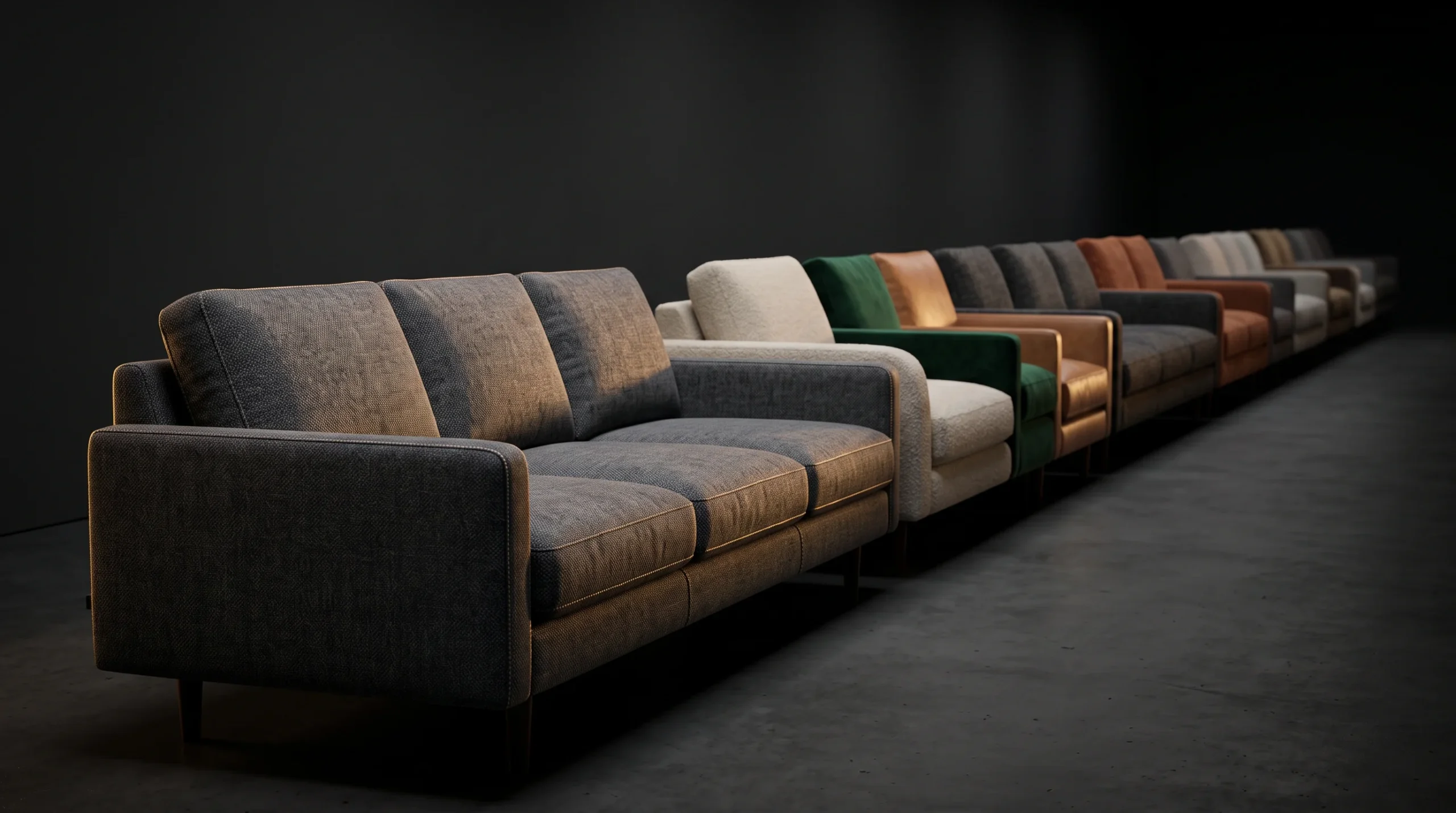
3D product configurator cost in 2026: the visible part
The published landscape, attributed: a custom-built configurator for a single product runs $4,000–$10,000, a multi-option product $10,000–$30,000, and enterprise CPQ territory $30,000 and far beyond (a July 2026 pricing breakdown by creative developer Hon Tran, who sells custom configurator and WebGL development — provider-published, not an independent market study). SaaS platforms cluster around $500–$2,000+ a month at working tiers (the same guide). Meanwhile the two most enterprise-famous platforms — Threekit and Emersya — publish no general price table: platform enquiries are contact-sales and custom-quoted, though Threekit does list a starting price on some use-case pages, such as $15,000 a year plus implementation for its engagement-ring configurator. Add the contract fine print the aggregators document: multi-year minimums, white-label surcharges, and in Zakeke’s case a 1.5–1.9% transaction fee on some tiers.
All real, all findable. And all of it is the visible half of the iceberg.
The line item buyers most often underbudget: your 3D assets
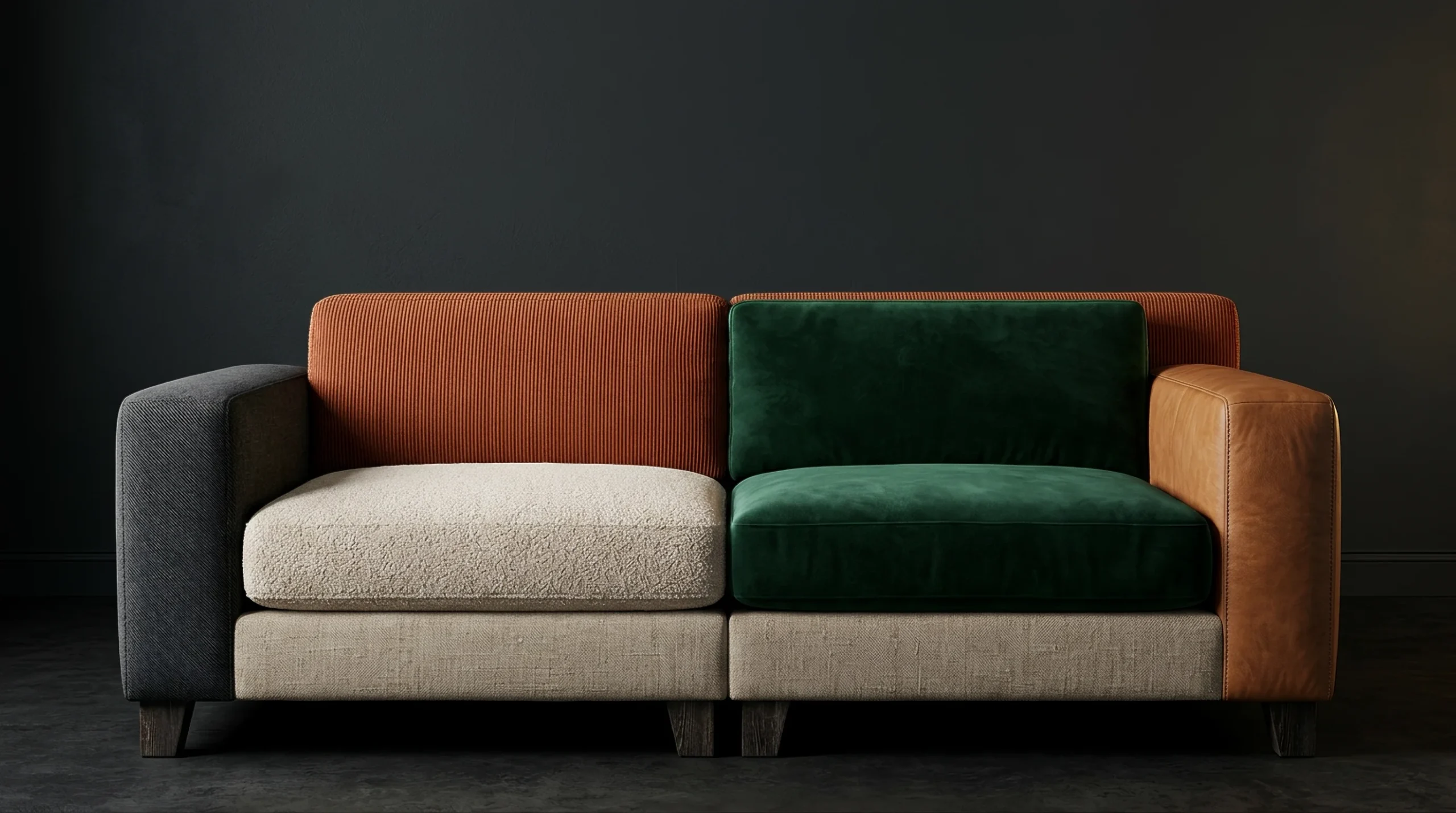
A configurator without configurator-ready models of your products is an empty frame. Yet in the published cost guides, assets appear as a one-line footnote: $150–$1,500 per model in hontran.dev’s guide (which also notes that for multi-SKU products, model production dominates the budget); €500–€5,000 per SKU in cpq3d’s vendor comparison, which publishes in euros; and per eyedex’s public calculator, a furniture base model at $180–$500 with each material or colorway variant adding $20–$80. For a worked example of what configurator-ready geometry looks like in practice, we took our own ring configurator apart screen by screen.
Do the arithmetic once and the footnote becomes the headline. One sofa with twenty fabrics: a $180–$500 base plus 20 variants at $20–$80 is roughly $580–$2,100 — for one product. A forty-product line at even modest variant counts can put the asset budget on par with, or past, the platform fee. Software pricing is the visible iceberg; assets are the mass under the water. Five SKUs barely tests the asset budget — the real bill arrives when merchandising joins the call.
Configurator-ready is a spec, not a vibe
The second surprise: the render files and CAD you already own usually can’t be dropped in as-is, because real-time platforms publish hard requirements. Zakeke’s documentation caps configurator models around 200,000 polygons and ~7 MB, with textures at 1024px on desktop and 512px on mobile. Expivi requires meter-scale units with a defined orientation and force-downscales textures to 2048px. Threekit’s guidance pushes one material per mesh and warns that download size, not just polygon count, is what kills performance on the devices your customers actually hold. Eyedex’s calculator states the consequence plainly: real-time models need polygon reduction, texture baking, and performance testing that static renders skip, and that optimization gap adds cost. The rework numbers back it up from the other side: orbe3d — itself a 3D modeling provider, so read its figures as vendor estimates — puts the penalty for each common buying mistake at 30–100% of the original spend, and in our experience reusing render files “as-is” is where configurator projects most often go sideways.
The late-variant tax: decide the fabric list before the contract
Orbe3D’s May 2026 furniture-modeling cost guide quantifies something we’d have told you anecdotally: a variant built during initial production costs $30–$80; the same variant added six months later costs $80–$150 — roughly double — because the pipeline has to be reopened, materials rebuilt to match, and everything retested. Multiply that across a seasonal collection and “we’ll add colorways later” becomes the most expensive sentence in the project. The same vendor lists four buying mistakes — choosing on price alone, leaving the intended use unstated, skipping a technical brief, and treating models as single-use — and estimates that each one adds 30–100% to the real total cost. The cheap decision is almost always the early decision — lock the SKU and variant list before anything is modeled, and brief the assets for multi-use (configurator, renders, AR) up front.
Does it pay off? The ROI numbers, read honestly
The case everyone cites is CITY Furniture. Here’s what the actual press release contains: shoppers spending around seven minutes in the experience, about 10% of product-page visitors customizing, eight pieces styled per session, 30% add-to-cart among users — engagement numbers, no revenue claim. The revenue figures circulate separately in the platform vendor’s own ROI materials, and they conflict: 10% revenue-per-session lift in one document, 5.2% in another. Both may be true of different scopes; neither is independently verified. Same honesty applies to the rest of the canon: Shopify’s Gunner Kennels case (fewer returns, higher conversion) is AR sizing visualization rather than a configurator, and the widely shared $4,500 furniture-configurator example with a +25% conversion lift (Chasing Illusions, 2025) turns out to describe what its own author calls “a fictional UAE-based e-commerce brand”, so it is not evidence of anything. Our read: the cases that survive scrutiny consistently show meaningful engagement; the revenue percentages are vendor-reported, they conflict with each other, and they should be treated as directional. Budget on the engagement case being credible, then model the money with your own conversion rate, margin, traffic and return costs rather than assuming any published uplift transfers to you. And note what the stronger cases have in common: shoppers actively engaging with the product rather than glancing at a static image. Asset quality is what makes those minutes survivable — a configurator that lags or looks wrong doesn’t get seven minutes, it gets one.
Budgeting the whole stack
The complete budget has five lines, and now you have sources for each:
- The platform fee — or the custom build
- The 3D assets, per SKU, variants included
- Integration with your store
- Maintenance and new collections
- The variant roadmap that decides whether line two stays sane
Sequence matters as much as totals — SKU list first, asset spec second (written against the platform’s published requirements), platform contract third. If you’re earlier than all of this and still working out what the experience should even be, start with what a 3D interactive presentation actually is; and if the assets are the part you’re staring at, that’s our work — the same models, built right once, also carry your product visualization work. And if what you’re weighing is the platform contract itself, there is a third option this guide has costed but not named: not buying one. We build configurators as well as the assets in them — Three.js on WebGL, delivered as an embed, a hosted URL, or source handed over to your dev team.