
Architects spend the bulk of their day inside drawings — plans, sections, elevations, axonometrics. Clients usually do not. That gap is where most projects stall, and it is the gap that 3D visualization for architects exists to close. We are an outside studio that produces the renders, walkthroughs, and interactive presentations that an architectural practice often does not have the in-house capacity (or the budget) to build itself.
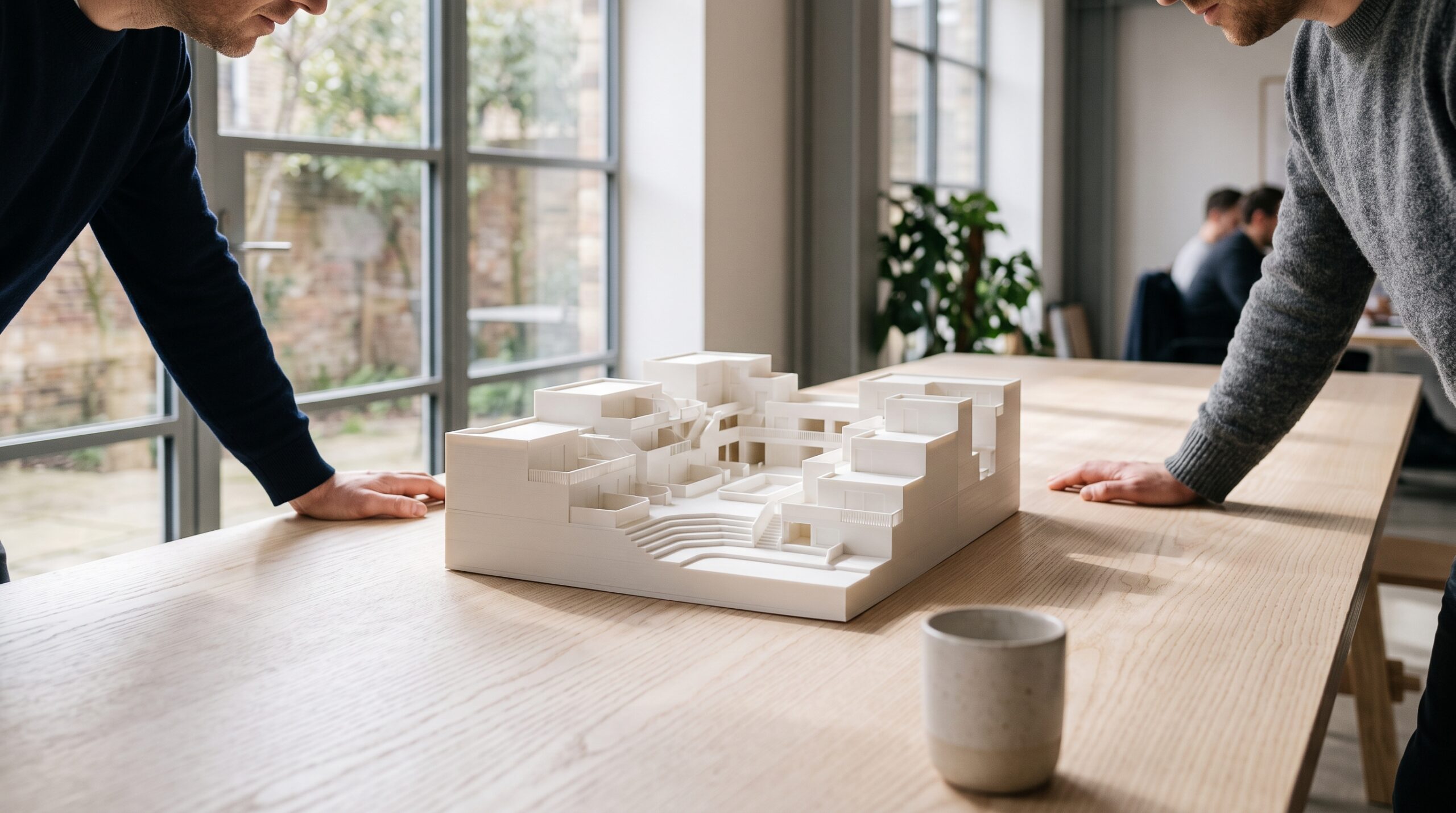
This page is for architects evaluating whether to bring in an outside visualization partner — what we do, how we plug into an architect’s workflow, and the things we deliberately stay out of.
Why architects bring in an outside visualization studio
Most architectural offices we work with have one or two people who can model in SketchUp or push a Revit view through Enscape. That is fine for early massing studies and internal review. It rarely produces the image that wins a planning hearing, convinces an investor, or sells off-plan apartments.
Producing a single hero render at the quality a developer expects from their marketing collateral can eat two or three days of a senior team member’s time. Multiply that by twelve images, a flythrough, and a 360 tour, and the cost of doing it in-house becomes obvious — especially when the architect’s actual job is the building, not the rendering of it.
The other reason we get the call: clients ask questions that drawings cannot answer. Most investors will not spend an hour decoding elevations and sections. We have seen projects lose momentum simply because nobody outside the design team could understand the drawings. A render solves that in a single image. A walkthrough animation solves it for the entire scheme. That is the work.
Our 3D visualization for architects: what we typically deliver
The mix varies by practice and by project stage. Below are the common briefs we receive.
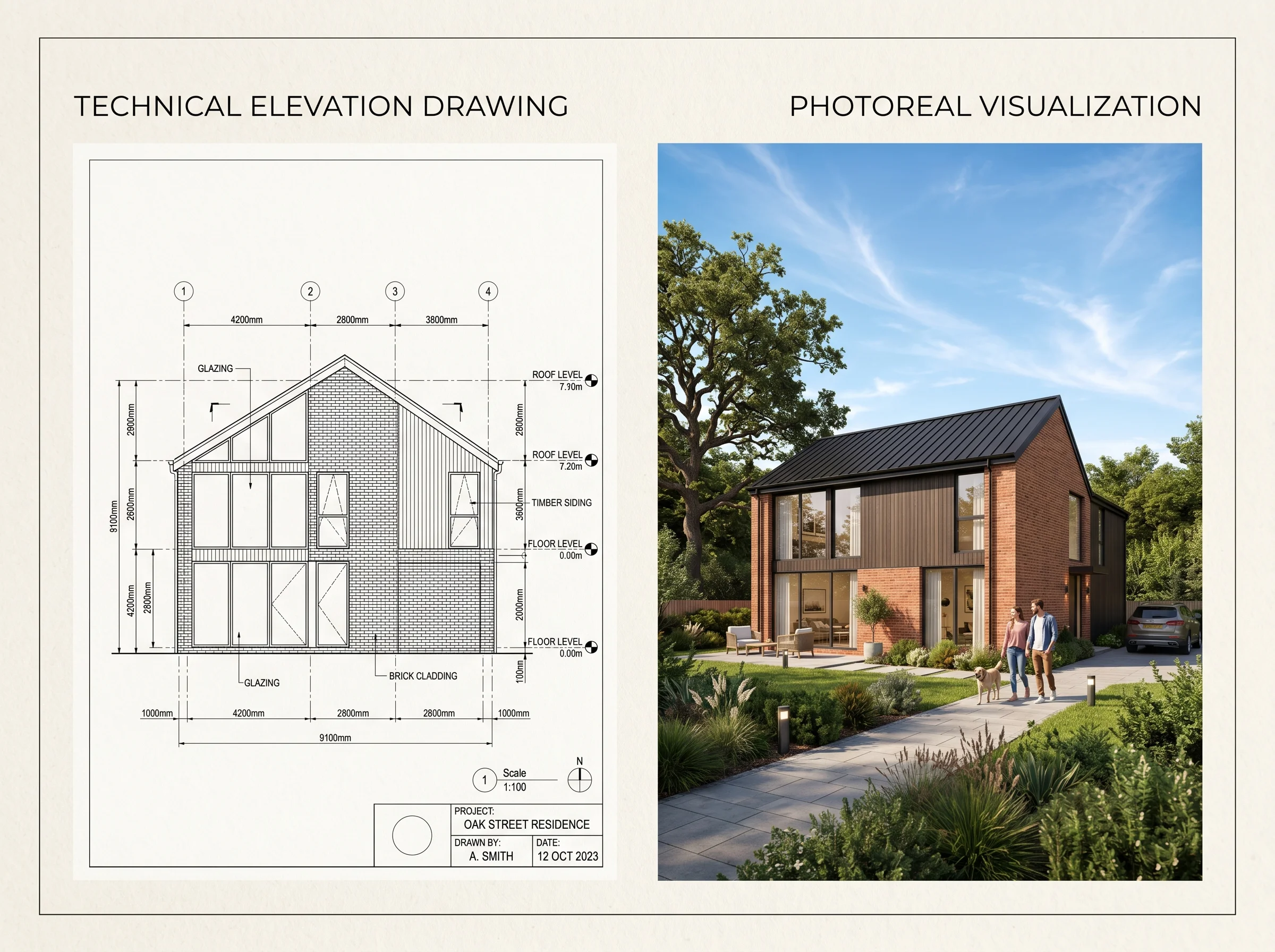
Exterior renders
Photoreal images of the building in context — daylight, dusk, sometimes night shots if the elevation has lighting design worth showing. We work from your Revit model, SketchUp file, AutoCAD plans, or just a set of PDFs and a site address. If the surroundings matter (and for a planning submission they usually do), we model the streetscape, neighbouring buildings, and the realistic vegetation a planner will recognise. Skies, weather, foot traffic, and parked cars are all decisions we’ll walk through with you before committing to a final pass.
Interior renders
Lobbies, residential interiors, hospitality spaces, offices, retail. For interiors the material conversation usually takes longer than the modelling — clients change their minds about flooring twice before settling, and that is normal. We light interiors so that the architecture reads first and the styling supports it, rather than the other way around. If you have specified actual products (faucets, lighting fixtures, joinery), we will source or build accurate models so the render reflects the real spec rather than a generic library equivalent.
Architectural animation
Cinematic flythroughs, walkthroughs, and presentation videos — usually for marketing or investor decks. A two-minute animation is a much bigger production than twelve stills; we’ll usually push back on this unless there’s a real reason a moving camera will do something stills cannot. When it’s the right call, you get a properly storyboarded film with the camera moves agreed in advance, not a montage of orbiting drone shots over a model.
360 panoramic tours
Useful for sales offices, planning consultations, and client review meetings where the audience needs to explore the space themselves rather than watch a fixed camera path. We deliver these as web-embeddable interactive tours, optionally with hotspots that jump between spaces or surface material information on click.
Interactive WebGL applications
The more involved end of the spectrum — browser-based 3D experiences where the client (or your client’s customer) can explore a building, swap finishes, toggle furniture layouts, or step through unit options. Most archviz studios stop at static renders and animation. We have built a number of these and they remain a genuine differentiator for us. They are also a serious piece of development work, so the conversation usually starts with whether the project actually warrants one.
How we work with an architect’s office
Every studio has its own intake habits. Ours, in rough order:
- Brief and reference. You send the drawings (Revit, DWG, SketchUp, PDF — whatever you have) and an idea of the shots you want. Reference images for mood and treatment help more than any written brief; if there are renders from a previous project you liked, send those.
- Scope and fee. We come back with a quote, a shot list, and a rough schedule. We do not quote on day-rates; everything is fixed per deliverable.
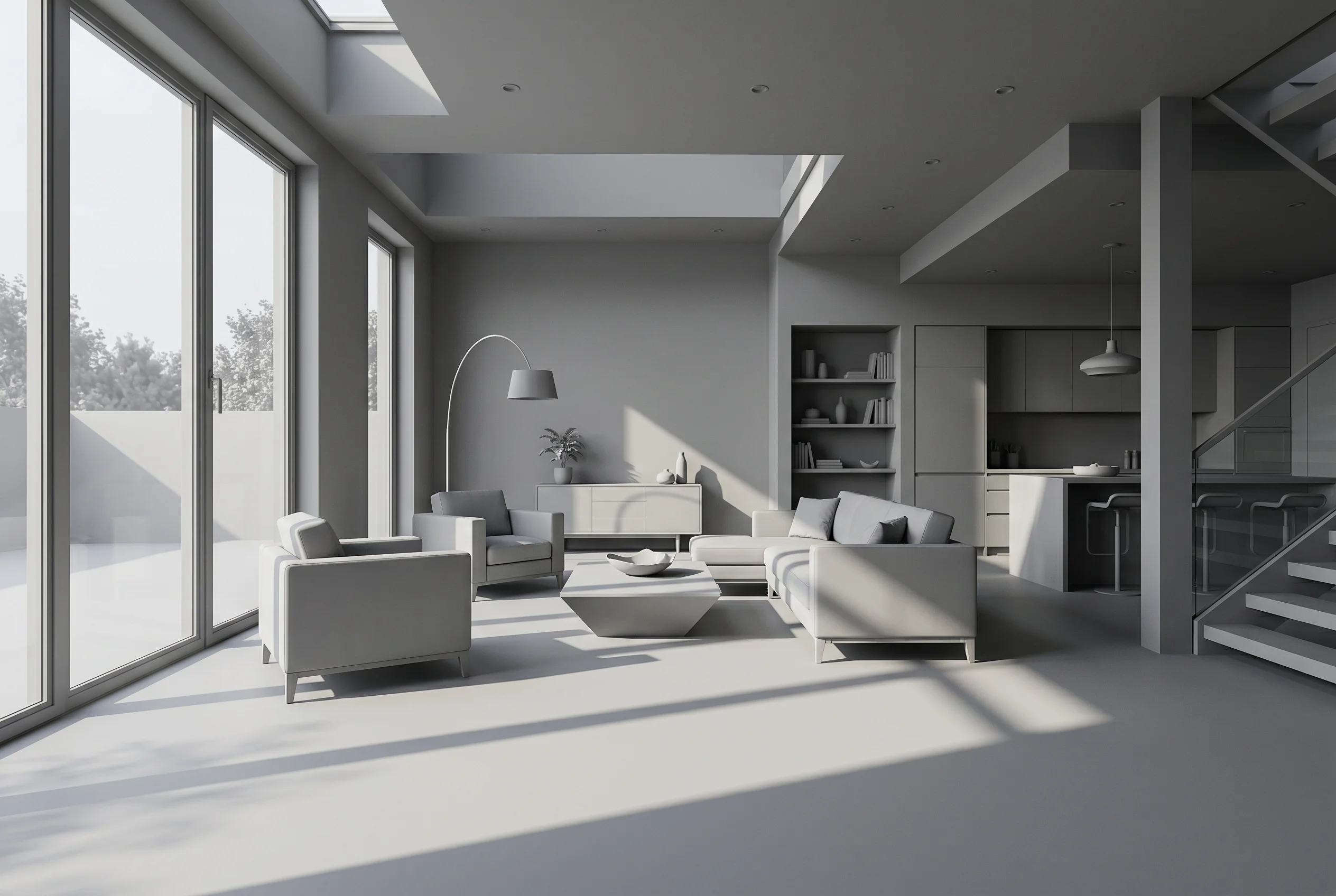
- Modelling and camera pass. First milestone is the model built out to the agreed level of detail, with cameras placed and basic lighting in. You get clay renders or low-resolution previews to sign off the angles. Lock the angles here. Half the value of a clay render is that everyone shuts up about texture choices until the camera angle is locked.
- Materials and lighting pass. Once the cameras are approved, we move on to surfaces, lighting, and atmosphere. Another round of preview images for sign-off.
- Final renders and revisions. Final high-resolution outputs, with a defined number of revision rounds included. Serious projects always have some change orders — we account for that, but we also won’t redo a hero shot from scratch because someone wants to try a different sky.
For a single render the whole thing can wrap in a week or two. For a full marketing package with stills, an animation, and a 360 tour, you should expect a longer engagement with several review milestones. Either way, we sit alongside your team — not in front of your client. Most of our work for architects is delivered under the practice’s own branding, with the studio invisible to the end client.
This sub-contractor mode is something we are comfortable with. A large share of our 1,500+ projects came through intermediary studios and agencies whose end clients were considerably larger than the agency itself. We can attend client meetings under your practice’s name, take feedback directly, or stay entirely in the background — your call.
What we do not do (worth saying explicitly)
To avoid wasted conversations: we are a visualization, drafting, and interactive design studio. We are not licensed engineers or stamped permit architects. That means:
- We do not produce stamped permit drawings, structural drawings, or engineered documentation.
- We do not do MEP design, structural calculations, or anything requiring engineer-of-record sign-off.
- We can produce preliminary drawings, existing-condition documentation, and design-development drawings that support your permit application — your licensed engineer or architect of record still does the certified work.
- We do not do stamped landscape engineering, though we will produce landscape concept renders all day.
Saying this upfront saves everyone a phone call later.
Software and file handover
Our primary stack is Revit, 3ds Max, and Corona Renderer, with Blender, AutoCAD, ZBrush, and After Effects in support roles. For interactive work we use Three.js and game engines as appropriate. We accept Revit, DWG, DXF, SKP, OBJ, FBX, IFC, and PDF inputs without complaint — and if the input is messy (and architect-supplied files often are), the cleanup happens on our side.
For architectural practices that want to integrate our outputs back into their own presentation pipeline, we deliver source files, layered PSDs, and individual render passes on request. For broader background on the visualization industry tools, our blog post on 3ds Max for architectural visualization covers the basics.
Working with us as a sub-contractor
If you are a larger practice with an in-house visualization team that needs occasional capacity overflow — or a smaller office that wants visualization as a white-label service alongside your design work — that is a fit. We have spent years working through intermediary studios; the workflow is familiar. The same applies to other audiences we support, including builders and developers and real-estate agencies who often come to us through architectural firms in the first place.
The practical question is usually scope and schedule. We will tell you honestly whether your timeline is achievable. If it is not, we will say so before quoting.